Thursday, November 10, 2016

An Amazon Review

I was surprised and very touched today by an Amazon review of my book, Apologies Forthcoming. This is a good time to be touched by something nice, so let me share it with you:

The kind of literature that makes you stop and feel
By M  on November 2, 2016
Format: Paperback|Verified Purchase

This is a genuine work of literature. The two stories I remember most are "Feathers" and "Pivot Point." The former is a devastating portrait of family loss, the latter, a haunting illustration of longing. In several of these stories is a protagonist who really establishes herself as a sort of feminist hero, a young woman at once happier as "just one of the guys" and critical of the way they treat women, including herself. An additional pleasure is the way the stories get the cognitive faculties working: suddenly the reader will come across two characters debating a mathematician's theorem, or a substantive quote by Confucius. Eberlein has a poet's eye, giving us the image of two birds on a wire when we don't expect it, and it's these unexpected moments--many of them image-based, some of them dramatic--which the reader remembers vividly. At the heart of Eberlein's craft is a finely tuned and inimitable sense of language. "I want to travel with you to every mountain, every water, I told him," and that use of "water" is le mot juste. To read these powerful works by Eberlein is a great privilege.

Wednesday, November 2, 2016

Chinese Americans Against Trump

I just can't imagine Trump as the President of the United States. Hillary Clinton might not be the best candidate, but Trump is the worst I've seen. He has demonstrated a fundamental lack of understanding of democracy. (Update: Obama did not overstate when he warned that "The fate of the world is teetering.")

I'd also like to point out the fact that many Chinese Americans are against Trump. See for example https://www.facebook.com/ca4ba/ (update: the name of the FP page has been changed after the election day).


/

(updated 11/4)

Thursday, July 21, 2016

Chinese Poetry Translation: Room for Disagreement

      This might be a bit unusual: in the short span of two months, the LA Review of Books published two essays on Chinese poetry translation: mine titled "Is There a Good Way to Translate Chinese Poetry?" and Lucas Klein's "Tribunals of Erudition and Taste: or, Why Translations of Premodern Chinese Poetry Are Having a Moment Right Now." My piece focuses on contemporary poetry translation, while Klein's gives more attention to the ancient works, but our topics – at times even views – converge. Still, as Klein points out, "There is much room for disagreement inside the agreement that…" (feel free to finish the line with your own words).

Sunday, July 3, 2016

A Friend on Lessons Learned from the Cultural Revolution

This is a long overdue post that I have been meaning to write. Now that the July 4th long weekend is here, I finally got the time.

After the New York Times interviewed me in early April, a friend who read it emailed me a comment, in which she says (in translation from Chinese):

The Cultural Revolution kept lots of youngsters out of school, but in a cruel way it also taught a few hard principles.  For example:

-          Stay far away from the Cult of Personality (regardless of its genesis and agenda);
-          Don't easily believe accusations against anyone (especially large-scale, top-down accusations);
-          When it comes to forming opinions on a person or a matter, don't use group thinking; 

How well said! How fundamentally down-to-earth these principles are to every individual. Those born later than our generation, those who are lucky enough to not have experienced the Cultural Revolution – a time when mob mentality played to its extreme – might not get the urgent point or understand the importance of these principles. I dare say, chances are, people will more often do exactly the opposite. It's human nature; it's the kind of human nature we need to be on guard for and fight against.

The friend then adds:

As long as human nature doesn't change, it is possible that the Cultural Revolution will be repeated. If we perceive any sign of that tendency, we must try to stop it regardless of personal dangers.  This is the mission that history entrusts to those of us who were there.

What a courageous thing to say.

On a different but related note, I will be in Berlin on July 13 to participate in a panel discussion as part of the Robert Bosch Stiftung's "Engaging with China" program. The topic is "50 years after the Cultural Revolution – how dealing with the past is shaping China's future."

Saturday, November 21, 2015

What an Honor

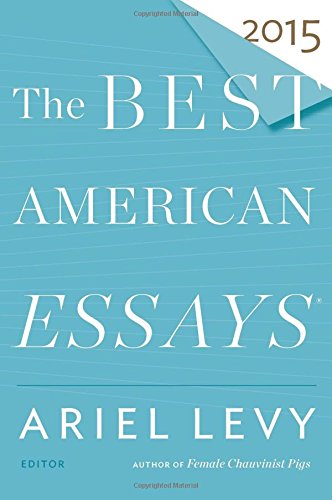
My essay, "Clouds and Rain over Three Gorges," is listed as a notable essay in the Best American Essays 2015.  This piece was the winner of American Literary Review's nonfiction contest last year,  and a finalist in Narrative's winter 2013 Story Contest.

Thursday, May 21, 2015

Poems After Poets

(Note:  I wrote poems in Chinese when I was young, and have also translated poetry from Chinese to English in recent years, but this is my first attempt to compose a few in English.)


Ambiguity
  After Gregory Corso

Her death
is as vivid
as memory
can evoke
and as blurred
as my memory
is to me


Layers of Sand
    After C. P. Cavafy

The memories of the current flow down in me
like fine sand sliding into a pit on the beach—
sun-warmed, glittering, and slippery fine sand

The memories of the past sink deeper,
cold layers of sand now hidden beneath;
some grains near the top still occasionally shine through,
shortly before being covered, out of the sun

I want to dig them up; their disappearance upsets me,
and I'm upset, too, for the mix-up from my digging.
I look in, at the topmost grains

I don't want to stop digging for fear the sand at the bottom
will start to turn into mud, and the mud take over the pit,
as quickly as the river water takes over the beach


Three Paradoxes
    After Wistawa Szymborska

When I speed across the intersection
I'm delayed, all cars deadlocked by mine

When I walk toward the horizon
I make it further away

When I look forward to tomorrow's sunlight
I come closer to the ultimate darkness


Wednesday, December 17, 2014

On Ezra Pound’s Translation of Ancient Chinese Poetry

Can one translate poetry without knowing the source language?  Certainly that was what Ezra Pound did.  In his volume Cathay (1915), Pound translates a total of 19 pieces of ancient Chinese poetry spanning a period from the 11th Century B.C. to 4th Century A.D.  But of course he couldn’t have done it without help from someone who had knowledge of the Chinese language, in this case Ernest Fenollosa, an American orientalist. The unusual situation, however, was that Pound was approached by Fenollosa’s wife after the man’s death.  At the time, in the 1910s-20s, English information about Chinese poetry must have been scarce, thus Pound’s only basis for the translation was Fenollosa’s meticulous unpublished notes. In addition to providing a word-by-word mapping between Japanese and English, the notes also include line-by-line draft translation into English.
Given Pound’s lack of knowledge of Chinese at the time, it is probably not a big surprise that Cathay contains quite a few citation errors. For example, the first poem in the collection, “Son of the Bowman of Shu,” is cited by Pound as from Kustugen (the Japanese name for Qu Yuan) in the 4th Century B.C., however it in fact is an anonymous work collected in Shijing (also known as Book of Songs), the earliest known volume of Chinese poetry.   Another example is the third poem, the famous “River Song.” Though correctly cited as from Li Bai (whom the Japanese called “Rihaku”), one of the most acclaimed poets in the Tang Dynasty, Pound had mistaken two poems as one.  The first 22 lines of “The River Song” correspond to a poem titled “江上吟” (“Humming on the River”), while the rest, starting from “The east wind brings the green color…”, correspond to a different poem by Li Bai titled “侍从宜春苑奉诏赋龙池柳色初青听新莺百嗽歌”, meaning literally “Following orders to write about listening to new birds singing in early spring, while serving the Emperor in Yichun Park” -- two completely different occasions in distinct settings.  It is curious that Pound would regard their contents as fitting perfectly in a single poem. There are a few other minor errors that I will skip here.
If the above errors are merely technical, wherever Fenollosa had missed the original Chinese meaning (though such occasions were few), the same problem also transferred into Pound’s “translation.”  Take “The River Merchant’s Wife: A Letter” as an example. In Li Bai's original poem, "长干行," there is this famous line that has since become a timeless allusion known as "bamboo horse and green plums":  
郎骑竹马来,绕床弄青梅。
Which Pound translated as (underlines are mine):
You came by on bamboo stilts, playing horse,
You walked about my seat, playing with blue plums.

Here, the word “” usually means “bed,” but in ancient Chinese it also means the fence of a backyard well. The latter meaning happens to be what Li Bai is referring to in this poem. Such language nuance can present difficulties for even a native speaker, not to mention a foreigner. Curiously, In Fenollosa’s notes the word is translated as “seat” instead of the usual meaning “bed.” He might not have known the other, less-common meaning of the word, and felt that “bed” wouldn’t have made sense: the first part of the line obviously refers to an outdoor setting.  Either “you walked about my seat” or “you walked about my bed” wouldn’t read right, but apparently Fenollosa went for the less nonsensical.  Pound might or might not have noticed this inconsistency, but there was not much he could do about it, being unable to read the original text. In any case, a glitch like this could probably be explained away by “poetic license.” So the error is kept.  In the same line, “blue plums” should actually be “green plums,” indicating the fruits are unripe, a metaphor for the young girl and boy.  This metaphor is completely lost in the translation.  
Another interesting thing to note is that the original poem alludes to an allegory known as “Holding-pillar faith,” which originates from a book by ancient Chinese philosopher Zhuangzi. The allegory goes like this:  a man is waiting for his female date under a bridge. Before the woman arrives, however, the river water unexpectedly rises. To be faithful to his promise, the man doesn’t leave; he holds onto a pillar of the bridge until he drowns.  The moral of this allegory is one can place love above his own life. Li Bai's lines that allude to this

十五始展眉,愿同尘与灰。
常存抱柱信,岂上望夫台。

were translated by Pound as

At fifteen I stopped scowling, 
I desired my dust to be mingled with yours 
Forever and forever and forever. 
Why should I climb the look out? 

In Fenollosa's notes, he had written a draft translation “I always had in me the faith of holding to pillars / And why should I think of climbing the husband looking out terrace.”  This is quite accurate literally; however it is unclear whether he was aware of the allusion. In any case he did not explain it. At this point Pound, who had faithfully followed Fenollosa’s translation so far, took the liberty to exclude that line completely, probably because he couldn’t make sense of it.  In its place he put “Forever and forever and forever.” The meaning of “forever” was indeed implied by Li Bai in his poem, but the great Chinese poet would never have said it so tritely; that would not be his poetic style. 
This example is one of a few places where Pound's translation departs from Fenollosa’s notes.  Reading the two men’s translations side by side for this poem, one can see that Pound  copied Fenollosa’s complete lines more often than not. T.S. Eliot said in a 1928 essay that “There is as much as to say that Chinese poetry, as we know it today, is something invented by Ezra Pound.”  It seems to me in that statement Ernest Fenollosa’s name should have at least been in line with, if not replacing, Ezra Pound’s.
Interestingly, Pound’s translation of the Chinese poetry – or should I say Fenollosa’s translation instead? – especially of the longer poems, often reads more fluid than what I’ve seen from ethnic Chinese translators.  Let’s compare two different translations of the first poem included in Cathay
---------------------------------------
The Chinese original:
采薇

采薇采薇 薇亦作止
曰归曰归 岁亦莫止
靡室靡家 玁狁之故
不遑启居 玁狁之故

采薇采薇 薇亦柔止
曰归曰归 心亦忧止
忧心烈烈 载饥载渴
我戍未定 靡使归聘

采薇采薇 薇亦刚止
曰归曰归 岁亦阳止
王事靡盬 不遑启处
忧心孔疚 我行不来

彼尔维何 维常之华
彼路斯何 君子之车
戎车既驾 四牡业业
岂敢定居 一月三捷

驾彼四牡 四牡骙骙
君子所依 小人所腓
四牡翼翼 象弭鱼服
岂不日戒 玁狁孔棘

昔我往矣 杨柳依依
今我来思 雨雪霏霏
行道迟迟 载渴载饥
我心伤悲 莫知我哀
---------------------------------
Ezra Pound's translation:
SONG OF THE BOWMAN OF SHU

Here we are, picking the first fern-shoots 
And saying: When shall we get back to our country? 
Here we are because we have the Ken-nin for our foemen, 
We have no comfort because of these Mongols. 

We grub the soft fern-shoots, 
When anyone says "Return," the others are full of sorrow. 
Sorrowful minds, sorrow is strong, we are hungry and thirsty. 
Our defense is not yet made sure, no one can let his friend return. 

We grub the old fern-stalks. 
We say: Will we be let to go back in October? 
There is no ease in royal affairs, we have no comfort. 
Our sorrow is bitter, but we would not return to our country. 

What flower has come into blossom? 
Whose chariot? The General's. 
Horses, his horses even, are tired. They were strong. 
We have no rest, three battles a month.

By heaven, his horses are tired. 
The generals are on them, the soldiers are by them. 
The horses are well trained, the generals have ivory arrows and quivers ornamented with   fish-skin. 
The enemy is swift, we must be careful. 

When we set out, the willows were drooping with spring, 
We come back in the snow, 
We go slowly, we are hungry and thirsty,
Our mind is full of sorrow, who will know of our grief?
--------------------------------

A translation by Yang Yixian and Dai Naidie, from A Choice Selection of Ancient PoemsChinese—English, published by Foreign Language Press in China:

We Gather Vetch

We gather vetch, gather vetch,
While the young shoots are springing;
Oh, to go back, go back;
But the year is ending.
We have no house, no home,
Because of the Huns.
We cannot sit or take rest,
Because of the Huns.

We gather vetch, gather vetch,
While the shoots are tender;
Oh, to go back, go back;
Our hearts are sad.
Our sad hearts burn,
And we hunger and thirst;
But our garrison duty drags on,
And no messenger goes to take news home.

We gather vetch, gather vetch,
But the shoots are tough;
Oh, to go back, go back;
The tenth month is here again,
But the king’s business is unending;
We cannot sit or take rest;
Our sad hearts are racked with pain,
And no one comes to comfort us on our march.

What splendid blossom is that?
It is the blossom of the cherry tree.
What great chariot is that?
It is the chariot of a nobleman.
His war-chariot stands ready yoked
With four proud stallions;
How can we settle in one place?
We march to three different posts in a month.
           
The four stallions are yoked
To make a sturdy team;
The nobleman rides in the chariot,
We take cover behind;
Four stately stallions,
Ivory bow-ends and a fish-skin quiver;
Every day we must be on our guard,
We are hard-pressed by the Huns.

When we left home
The willows were softly swaying;
Now as we turn back
Snowflakes fly.
Our road is a long one
And we thirst and hunger,
Our hearts are filled with sorrow;
But who knows our misery?
--------------------
The translators were/are all literary experts in their own native language.  However, when it comes to translation, neither party appears to have sufficient knowledge of the nuance of the other language.  Though both translations are fairly accurate in meaning, they read quite differently as poetry.
This Chinese poem, "采薇," from the 11th Century B.C., laments soldiers’ homesickness as they guard their kingdom’s border against nomad invaders from spring to winter. Its meaning is straightforward and there are no allusions, but like other poems in Shijing, this one maintains a singing/chanting rhythm throughout, in which a refrain occurs often, not only between stanzas but also within a line.    
The Chinese translators certainly understood the form and meaning of this poem better than Pound, and their translation attempts to render the folk song quality with the refrain pattern.  However their English is not nuanced enough to match their Chinese level of artistic quality.  For example, admittedly nitpicking: using “to go back” without context is a common Chinglish way of expressing “returning home.” It is rather unclear here and could lead to basic misunderstanding of the literal meaning. In comparison, Pound’s translation has lost the original poem’s style and folk-song quality, but reads much more fluid and natural (and "get back to our country" quite clear).  This is to say, each translation has its own strengths and weaknesses. This also implies that, it is possible to keep the strength of each and avoiding many of the weaknesses by combining the two.
Consider a modified version that blends the above two translations and fixes their errors. For the sake of the sounds, I'm adopting the word "vetch" for , since there are so many interpretations for what this wild vegetable actually is/was – spinach, wild peas, fern shoots, vetch, etc., you name it – and I have no way to tell which is most accurate. For similar reasons, I'm keeping "Xianyun" from the original poem for the name of the "foemen" tribe.

Picking vetch, picking vetch, the first shoots are springing
Saying “Return,” saying “Return,” the year is already ending
No family, no home, because of Xianyun the foemen
No rest, no comfort, because of Xianyun the foemen

Picking vetch, picking vetch, the shoots are soft and fresh
Saying “Return,” saying “Return,” our hearts are full of sorrow
Sorrowful minds, sorrow is burning us, so is hunger, so is thirst
Our defense is not yet certain, no one can be sent home

Picking vetch, picking vetch, the shoots are getting tough
Saying “Return,” saying “Return,” it is October already the tenth moon
No ease in the king’s affairs, no break for us
Our hearts pain with sorrow, we still can’t go home 

What fabulous blossom is that?  It is the cherry tree’s
Whose great chariot is that? It is the general’s
The war-chariot is yoked, the four horses are tall
No one dares rest, three battles a month

Four horses are driving the chariot, four strong horses
The higher men are on them, the lower men are by them 
The horses are well trained, bows of ivory, quivers ornamented with fish-skin 
No one dares relax, the enemy is swift 

When we set out, the willows were drooping with spring 
When we come back, snowflakes fly everywhere
We go slowly, we are hungry and thirsty
Our mind is full of sorrow, who will know our misery?

If my modified version above is indeed an improvement in the translation, then a case can might be made that better literary translation would be a cooperative project between two translators, one a native speaker and expert of the source language, and the other the target language.  Only in this way, can the nuances in both languages be captured and presented in the translation.  This, of course, is mainly for the benefit of readers and the quality of the translated literature.  I do understand that not every translator would be willing to share his or her work or cooperate with another translator.
            

Monday, February 10, 2014

What Foreigners Do in China

(Also published on LARB's China Blog)

In the remote mountains of Yunnan Province, China, a middle-aged European ecologist gave up his high-level international program manager job and made his home with a local woman. Together, they set forth to reestablish the rainforests destroyed by rubber tree plantations, cultivated a garden — a seed bank — that “was home to more species than all of Germany,” reintroduced indigenous plant species to China, and homeschooled two bright young children with knowledge, poise and manners belying their age. In 2010, the extraordinary life of the ecologist, along with the draft of an unconventional paper that could “be of enormous value to mankind,” was cut short by a heart attack.

This story about Josef Margraf, written by journalist Jonathan Watts, is not a news report or profile but rather an essay, moving for both Watts’ own introspection and his sketch of Margraf’s life. I read it in the anthology Unsavory Elements —Stories of Foreigners on the Loose in China, in which editor Tom Carter has assembled 28 short contributions by a variety of expat writers. I had opened the book with the intention of browsing through it quickly. Though I was curious about how expats live in China, and why there are so many of them now, as a Chinese writer with a certain cynicism, I did not expect to find anything truly surprising. But surprised I was, and my own stereotypical presumptions stand corrected.

In 1971, when I was a middle school student in the city of Chongqing, recruiters dressed in military uniforms from the faraway Yunnan Production and Construction Corps — a more attractive name, I suppose, than “rubber plantations” to teenagers at the time — arrived at my campus and called on students to join them “guarding the frontier and cultivating the borderland.” Many of us, me included, applied with youthful enthusiasm, and almost everyone I knew who applied got their wish. I was spared because I was under-aged and also because some insightful adults, who viewed higher education as more important than planting rubber trees, stood in my way. In all, about 100,000 middle school students were collected from the cities of Beijing, Shanghai, Chongqing, Chengdu, and Kunming and sent to labor in Yunnan’s rubber plantations. The collective name for those young people was “Zhiqing,” or “Educated Youth.” Seven years of hardship and many tragic stories later, in the winter of 1978-79, those Zhiqing launched a spontaneous mass rally that has since been termed the “big return-to-city storm,” which eventually did bring them home. By then I, as one of the lucky few, had entered my second year in university, but my middle school friends who went to Yunnan missed their chance not only for university, but even for a high school education.

I had thought that the wasted youth of my 100,000 contemporaries qualified as the biggest damage caused by the rubber plantations, and that an end had been put to the practice in early 1979. Not until reading Watts’ chapter did I realize with a shock that the rubber plantations have been expanding during China’s recent economic boom and have gone on to become one of “China’s greatest ecological disasters.” The invasive species eats away at the region’s fertility and diversity, changes weather conditions and rainfall, and threatens to wipe out China’s only tropical rainforest. Many friends from my youth, through their goodwill and hard work, had unknowingly contributed to the disaster while also bringing short-term benefits to China’s industries.

In his essay titled “Invasive Species,” Watts also points out that, ironically, it was Europeans who brought rubber trees and monocultural practices to China more than a century ago. As a European himself, Josef Margraf’s effort thus could be viewed as “looking to the future by making up for the past wrongs.” “I think Josef has achieved more than any foreigner I had met,” says Watts, who also wonders loudly, “weren’t we too part of a kind of invasive species?”

Nowadays, there are over one million foreigners living in China, “many of whom are in effect economic refugees,” says Tom Carter in his introduction. The exponential growth of foreign residents compared to the late 1980s, when I first met my American husband in Chengdu, alone illustrates the now tried and true cliché “look how much China has changed!” Chinese readers of my generation, however, might also find in the book more than a few things that are unchanged, sometimes in unexpected corners. Dominic Stevenson, who fits more into the category of adventurer than economic refugee, left a comfortable life in Bangkok for China, but ended up spending two years in a Shanghai prison for being a hash smuggler along the ancient Silk Road. Stevenson’s essay, titled “Thinking Reports,” provides a rare glance at life as a foreign prisoner. A bizarrely familiar scene described in the chapter is probably unfamiliar to today’s young generation of Chinese: Stevenson and his cellmates are required to write “thought reports,” a maddening practice prevalent in the Cultural Revolution years that had “reformed” more than a few otherwise noble men into despicable informants betraying their friends. The suspense of Stevenson’s story is thus how he, a liberal-minded foreigner, will react to such a request. I can only hope the practice of “thought reporting” preserved in a prison is not going to reappear in Chinese society at large, a dreadful outlook no longer unthinkable under Xi Jinping’s rule.

But I might be too pessimistic. Simon Winchester takes my emotional ride with the expat experiences to a high point in his epilogue, where he is stuck in the void of western China’s desert alone with his dead car, toying with the prospect of perishing. “Except.” Following this emphatic pause is a cellphone signal, and his rescue because of it. “The Chinese build their infrastructure well these days, and one of the first things they have created in making their new nationwide transportation system — long before finishing the roads — is a cell phone network.” I might not agree with the author’s conclusion that China has become so successful today “precisely because it [is] not a casually planned society any more,” but that does not stop me from being in a celebratory mood when reading about a man’s life saved by China’s modern telecommunication infrastructure. This despite my own support for a neighborhood protest against the building of another cellular tower in our Boston suburb.

While my contradictory attitude might be explained away by the Chinese adage This is one time, that was another, Graham Earnshaw’s chapter “Playing in the Gray” tells a story eerily reminiscent of an earlier time. In 1872, a British businessman named Ernest Major launched one of the first and most prominent Chinese newspapers, Shen Pao, in Shanghai, which went on to lay the foundation for modern Chinese newspapers and continued publication for 77 years, until the Communists took over Shanghai in May 1949. Half a century later, in 1998, Earnshaw, again a Briton, again in Shanghai, founded “the first independent weekly English-language newspaper to be produced in Shanghai since the communist takeover in 1949.” “Sure, it was illegal. It had no publication license, its content was not reviewed by the Propaganda Bureau ahead of publication, and we had no right to print or distribute. But we did it anyway.” This fascinating experience led Earnshaw to believe China is a place where “nothing is allowed but everything is possible.”

Perhaps that is one of the major attractions of the Middle Kingdom. In an interview with Business Insider, Tom Carter was asked, “Do you think that the influence of foreigners on China is a good thing?” and he answered, “All things considered, I think China is more of an influence on the expats who live here than we are on it…” Circling back to the story about Josef Margraf, the influences work both ways, and every person has a different story to tell. I ended up reading through Unsavory Elements page by page, story by story, on the train to work in the morning and, when I was lucky enough to find a seat, on the way home in the evening as well. It is an uneven book, as might be expected of any anthology. There are a few stories that come across as condescending, sentimental, or dull. But the majority of them are captivating and, as a whole, the book is unexpectedly wide-ranging, thought-provoking, and entertaining.

Monday, November 4, 2013

"Better to Let Half of the People Die," said Mao?

http://www.amazon.com/Tombstone-Great-Chinese-Famine-1958-1962/dp/0374277931
Nearly two years ago, when I translated Yang Jisheng's response to Dikötter's strange comments on Tombstone, I said I was intensely interested to find out whether Mao really said "It is better to let half of the people die so that the other half can eat their fill," and if he did, in what context.  I received a couple of clues, but none provided the complete context, and I have been left wondering since. I even sent an email to Yang Jisheng asking if he knew about this Mao quote, but did not hear back – perhaps the email address I got from a journalist friend was no longer valid.

Amazingly, last week the answer came to me by accident, as I was reading a scholarly article written by Anthony Garnaut, a historian at Oxford, published in the journal China Information. 

In his article, "Hard facts and half-truths: The new archival history of China's Great Famine," Garnaut finds out that the Mao quote in question is not from a speech Mao delivered on March 25, 1959 as Dikötter claims, but it represents an impromptu response Mao made to Bo Yibo's report on the implementation of the industrial plan in the days that followed. "The comment is preceded by several remarks by Mao about Party oversight of the industrial sector, none of which touch upon agriculture or rural welfare." Mao was weighing in on how many projects should be undertaken to accomplish the plan set forth in Bo's report. Mao says:

If we want to fulfill the plan, then we need to greatly reduce the number of projects. We need to be resolute in further cutting the 1,078 major projects down to 500. (要完成计划,就要大減项目。1078个项目中还应該堅決地再多削減,削到500个。)

To distribute resources evenly is a way to sabotage the Great Leap Forward. (平均使用力量是破坏大跃进的办法。)

If all are unable to eat their fill, then all will die. It is better for half to die, so that half of the people can eat their fill. (大家吃不飽,大家死,不如死一半,給一半人吃飽。)

"The ‘people’ whom Mao was willing to let die of starvation turn out to be not people at all," Garnaut concludes, "but large-scale industrial projects."

I'm glad this fact is clarified, not because it mitigates Mao's guilt (it doesn't), but it supports the conclusion I reached in my LARB review of the two books by Yang and Dikötter respectively, that "the catastrophe was not a deliberate act of mass murder like the Holocaust, as Dikötter suggests. Rather, it was the result of policy failures from a governance system based on the control of ideology and information." This distinction is important if there are any lessons to be learned for today's leaders.

Another China scholar once wrote me – after reading my LARB review – that Mao's
monstrous moral failing was not in the motivation of starting the Great Leap Forward which turned out to be disastrous, but in his attitude toward criticism of his policies in the aftermath. I couldn't agree more with this assessment.

A question remains:  did Dikötter know what Mao meant but intentionally misinterpret it for wanting a smoking gun, or was his Chinese not good enough for him to know what he was doing?

By the way, Garnaut's article also analyzes Dikötter's repeated assaults on Yang Jisheng and his unacknowledged use of Yang's research results. I must say that, to date I still don't quite understand Dikötter's motivation in turning around on someone who had helped him generously with his research.


Sunday, September 15, 2013

Reviews of Unsavory Elements

I have gotten good feedback on compiling reviews for a book (example: "Reviews of Deng Xiaoping in Review").  So here is another one - today for Unsavory Elements: Stories of Foreigners on the Loose in China. Some of these reviews (as well as the comments they triggered) are surely interesting to read.

I also plan to write a review myself, and I can tell you beforehand that I honestly enjoyed reading most of the book. But since translation issues will be beyond the scope of my review, here I'd like to briefly discuss the translation of two Chinese phrases, which I happened to encounter in two of my favorite stories in the book. 

"思想汇报" -- in the book it's translated as "thinking reports,"  but "thought reports" might be more accurate, and read better.

"哪里哪里" -- as a modest response to praises, this is humorously translated as "Where? where?" in the book.  If you have read my posts on translation before, you would know I'm often in favor of literal translation, but here I agree with one of the book reviewers below that "Nah, nah" would be a better rendition. Note also that the question marks don't exist in the original Chinese phrase. As a bilingual reader I enjoyed and appreciate the writer's humor, but for English readers who don't know Chinese the confusion caused by  "Where? where?" might trump the humorous effect.

Now, here is my compilation of reviews as well as interviews with Tom Carter the editor, in reverse chronological order of their publication dates --

(Updated 11/5)

TheAtlantic.com, Nov. 5, 2013
http://www.theatlantic.com/china/archive/2013/11/unsavory-elements-on-foreign-lives-in-contemporary-china/281144/

LA Review of Books, Sept. 25, 2013
http://tumblr.lareviewofbooks.org/post/62262869667/foreign-elements-a-q-a-with-photographer

The Peking Duck, Sept. 13, 2013
http://www.pekingduck.org/2013/09/unsavory-elements-edited-by-tom-carter-2/

Caixin Online, Aug. 24, 2013
http://english.caixin.com/2013-08-24/100573568.html

Asian Review of Books, Aug. 17, 2013
http://www.asianreviewofbooks.com/new/?ID=1545

Business Insider, Aug. 2, 2013
http://www.businessinsider.com/unsavory-elements-by-tom-carter-2013-8

TheNanfang.com, July 22, 2013
http://www.thenanfang.com/blog/unsavory-elements-and-the-changing-nature-of-being-an-expat-in-china/

That's,  June 17, 2013
http://www.thatsmags.com/beijing/articles/15499

Chengdu Living, June 1, 2013
http://www.chengduliving.com/unsavory-elements-in-chengdu/

The Beijing Cream, May 21, 2013
http://beijingcream.com/2013/05/unsavory-elements-the-good-the-bad-and-the-boring-foreigners-of-china/

Beijing Bookworm: "A Q&A with Tom Carter," May 21, 2013
http://beijingbookworm.com/between-the-stacks/unsavory-elements-a-qa-with-tom-carter/

Time Out Shanghai, May 10, 2013
http://www.timeoutshanghai.com/features/Books__Film-Book_reviews/11883/Unsavory-Elements.html

The Beijinger, May 9, 2013
http://www.thebeijinger.com/blog/2013/05/09/book-review-unsavory-elements-stories-foreigners-loose-china

Shanghaiist, May 8, 2013
http://shanghaiist.com/2013/05/08/review_unsavory_elements_earnshaw_books_tom_carter.php


Sunday, March 31, 2013

Reading: Harper's on Bo Xilai

For much of 2012, the year of China's political earthquake, I waited to read Harper's analysis of the Bo Xilai saga, but never got the chance. As a long-time subscriber, I'm glad to see a report this year, even if it's a bit late.  In her informative article "The Unraveling of Bo Xilai – China loses a populist star," Lauren Hilgers provides balanced coverage of the divided public opinions on Bo, and convincingly shows how information unavailability helped to veil the fact that a Chinese politician who once appeared to be the most accessible "had been no more candid than any other Party secretary."  

I completely agree with Hilgers that officialdom opacity is a big problem in China and, as I've discussed before, different social classes have different level of access to information. But her article sparked more thoughts. Suppose all the social classes received the same amount of information about Bo Xilai, would their positions toward him converge?   I doubt it.

Chongqing, where Bo Xilai last ruled, is my hometown and I visit it often. There has been a heavy divide between the locals even when confronted with the same promulgated information.  Intellectuals I spoke to disliked Bo's behavior and policies long before his downfall; this is consistent with Hilgers' report.  Many low-income, less-educated people, on the other hand, continue to advocate Bo even after his dark side has been exposed and the initial stage of disbelief has passed. What's interesting – and also alarming – is the latter's reasoning. So what if Bo was corrupt? They say, Which official in China is not?  But the others are corrupt AND incompetent, while Bo was capable of getting something done. So what if Bo's "Chongqing model" was causing local government bankruptcy?  Certainly it is a lot better to spend the money on local construction than let it fall into the pockets of corrupt officials. And, so what if Bo Xilai and Wang Lijun carried out cruel torture, unjust executions, and massive imprisonments of private businessmen and political dissenters during their "anti-mafia" campaign?  Since ancient times, "killing the rich to benefit the poor" has been justified.

So, the most urgent and fundamental problem as seen by the two groups of people is different. To those with low-income, it is the wealth gap.  To liberal intellectuals, it is the rule of law. Both are legitimate concerns, and both should be addressed.  Bo, however, for his own self-serving agenda chose to play the game of favoring one and trampling the other. While it is clear that he placed himself above the law during his rule in Chongqing, there is no evidence that his populist policies (the so-called "Chongqing model") actually reduced the wealth gap; further, the face engineering that pleased his supporters is unsustainable, as it was implemented with heavy borrowing that has put Chongqing's finances into dire straits. In fact, what the current division in public opinion reflects is that the Bo incident has become an anchor from which both sides can vent their discontent.

Hilgers also touches on a very interesting phenomenon: "[T]here were two groups who disliked Bo Xilai: Party leaders and liberal intellectuals."  I wish the author had explored this coincidence a bit further. When groups we think of as critical of Chinese authority find themselves on the same side of some issue, this is worth analyzing and understanding. But I realize it is also beyond the scope of Hilgers’ article.

Sunday, February 24, 2013

Foreign Literature in China: Now and Then

In LARB:  In the Wake of Finnegan: A Q & A with Xujun Eberlein
 
image
 
This week’s Q & A is with the China-born and now Boston-based Xujun Eberlein, a short story writer, blogger, essayist, and contributor to LARB.

I contacted Xujun in part simply because I was curious to learn her reaction to two recent literary-minded and China-focused New York Times pieces. One focused on the surprisingly brisk sales in China of a book by James Joyce, while the other was a commentary by NPR Beijing bureau chief Louisa Lim on trends in censorship and the popularity of Chinese “officialdom novels.” Both brought Xujun to mind, since she has often reflected on the flow of books and ideas between China and the West and she has written an essay on the “officialdom novel” genre.

She was good enough to break up her Lunar New Year trip back to Chongqing to speak with me.

Jeff Wasserstrom: Do you have any thoughts on why Finnegans Wake might be selling so well in China?

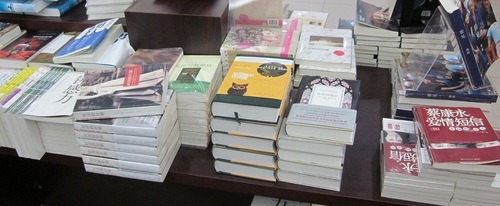
Xujun Eberlein: I was curious about this myself. I’m in Chongqing for Chinese New Year and I went to the Xinhua Bookstore downtown on Saturday (February 9) to have a look at the book. A young staff member led me to the desk where the Chinese translation of Finnegans Wake (the yellow cover at the center of the above photo) was on display with other new and noteworthy books. As you may see from the photo, next to Finnegans Wake is the translation of polish novelist Henryk Sienkiewicz’s Quo Vadis, which has a supplementary band to note the author is a Nobel Laureate. The red cover on the right is a Chinese popular novel titled Love SMSs. I asked the young man how Finnegans Wake was selling there and he said “Not bad.” He noted that its sales were similar to One Hundred Years of Solitude and Love in the Time of Cholera. When asked what kind of readers were buying it, he said “mostly young people.”

Read more.


Friday, February 22, 2013

"Skylark": a Translated Story

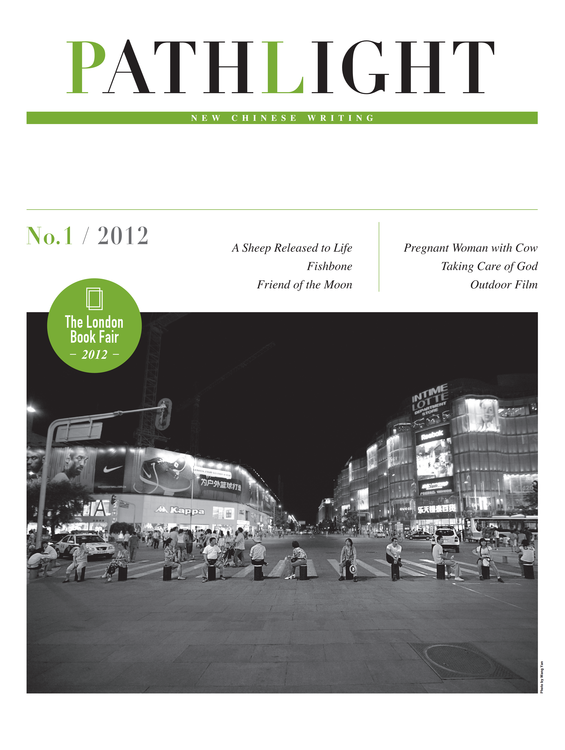
Cover Image(Note:  This is a short story I translated for Pathlight issue No. 1, 2012, posted here with permission. I had not heard about author Jin Renshun before I got the assignment. Her writing is both beautiful and subtle, and I truly enjoyed translating the piece. I tried to be faithful to her original style and hope I've succeeded somewhat. – Xujun)

Jin Renshun:   Born in 1970 of Korean extraction, and now living in Changchun, Jin Renshun has published the novel Spring Fragrance, the short story collections Cold Front of Love, Moonlight Oh Moonlight, One Another, and The Glass Café, and the essay collections Like a Dream in Broad Daylight and Poisonous Beauties. Her work has been translated into Japanese, English. German and Korean. In 2010 she attended the University of Iowa’s International Writing Program.

Skylark


Each day at dusk, from six to eight, the third table by the window was reserved for Kang Joon-Hyuk. Occasionally he brought friends – perhaps employees – with him, but mostly he came alone, magazine in hand, to read a few pages before the dishes were served. He and Chun Feng spoke every day, but nothing beyond her asking what he’d like and his ordering of dishes, followed by a few pleasantries of the “Thanks,” “You are welcome” sort.

One day Chun Feng forgot to put the “Reserved” sign on the table. By the time she realized her mistake, the table was occupied by two middle-aged women who chatted nonstop from the second they walked in. They ignored Chun Feng’s apologies and requests.

“This is where we’re sitting,” they said. “We’re not going anywhere.”

While another waitress handled their order, Chun Feng went outside to wait for Kang Joon-Hyuk.

“I’m really sorry,” she bowed to him, tears spilling forth. “It’s all my fault.”

“Did I cause you any trouble?” he said. “You stood in the wind for so long, for such a little thing! It’s me who should apologize.”

(Read the complete story here)

Friday, December 28, 2012

Chongqing Police: Before and After Wang Lijun's Downfall (2)

Wang Lijun sounded like such an arbitrary person. One question the Chinese reporter asked was really good. – Xujun

[in translation; continued from the previous post]

Southern Weekend: The Women’s Traffic & Patrol Special Detachment that was set up under Wang Lijun, will it be disbanded?

Chongqing Police Official: The Women’s Traffic & Patrol Special Service Detachment, the idea for the future is to maintain a normal institutional structure, there will be men and women, some women will be diverted to other departments. Let some women comrades join the Traffic & Patrol for nonviolent law enforcement, that's all right, but to set a special women's detachment, we do not quite agree. Especially, the design of a special uniform for them was a serious breach of regulation, something that had never happened in the history of China's public security. Since May 1st of this year, the Women's Traffic & Patrol Detachment has changed the uniform.

SW:  Any results after you made ​​the above adjustments?

Chongqing Police Official: Of course. The police platforms emptied manpower from the stations, and the basic work in public security was very weak, that was why the "3 • 19 gun-robbery" case was not solved for a long time. When solving the Zhou Kehua case, we did not make big noise. In less than four days Zhou Kehua was [found and] shot; police from stations played a direct role in this, and the masses provided important clues, which proves the importance of public security grass-roots work.

SW:  After a series of twists and turns, has the operational capacity of the Chongqing Public Security declined?

Chongqing Police Official: Objectively speaking, in recent years the Chongqing police's  operational capacity has declined somewhat, but it's hard to say how much. There are several reasons: First, the 2010 "institutional reform" made a mess for cadres. Institutional restructuring was originally required by the central government and the city, and the requirement was legitimate. However, Wang Lijun required all 308 division-level cadres and 2544 subdivision-level cadres be dismissed. All had to start over and try regain their positions through competition. Because he did not trust the local cadres, Wang Lijun also required 200 division-level cadres to be transferred in from outside, but we had only a total of over three hundred posts at that level. The complete overturn was to pave the way for outside cadres. At the time, the comrade who was heading the Political Department said that, according to regulations, administration personnel are appointed but not hired, thus they can't be simply dismissed from employment.   Wang Lijun thought about it and said, "Then lets call it 'dismiss from tasks'.". That was how this new term was coined by Wang Lijun. In this way, all human resources were disrupted, a large number of highly skilled cadres effectively became rookies, and needed time to get familiar with their new jobs. Secondly, 11,800 new police were recruited and placed in their posts directly, which caused the poor quality of case-solving in recent years. Now we have decided to start career training for the new police.

SW: I heard that you recently restored posts for some police officials at division and subdivision levels who had failed to regain employment through competition.   Does this mean you let some unqualified officials return to their posts?

Chongqing Police Official: According to the regulations, in institutional reform, the filling of posts should first consider existing qualified cadres, and then use any vacant posts for employment through competition.  But he overturned everything.

When giving examinations, he made ​​it clear one test that must be included was whether police had studied Bo Xilai's and his speeches.  After some struggle, we managed to also include some professional questions. Overall, the quality of cadres who passed the exams was not too bad.

In the end, 159 division level and 968 subdivision level cadres were not used. Most of those were either not allowed to participate in the competition because Wang Lijun put trumped-up charges on them, or they passed the competition but Wang did not like them and did not want to use them. Recently, this group of cadres went through re-examination, and 76 division level cadres and 299 subdivision level cadres were reappointed.  For those who have reached the retirement age, their treatment is retained but they no longer work on key posts. For the few with very low public acceptance and poor performance, we did not reappoint.

1123 police demanded vindication

SW: Recently, we keep hearing that the Chongqing police launched a large scale internal vindication. How many police have been vindicated?

Chongqing Police Official: In May, we set up a special review team headed by a Deputy Chief, to specifically accept and review complaints of police who had been punished. So far we received a total of 1123 police complaints. Because some of the cases involve multiple individuals, the number of police that require review is 2202. So far 1796 have been reviewed; 78% of the original decisions were overturned, 13% retained,  and 9% modified. A number of departmental, division and subdivision police have resumed their duties and received retroactive wages.  So far 133 resumed their leadership positions, including 48 at the division level, and 85 at the subdivision level. Among another 9 cadres at deputy departmental level who had been dismissed, 3 have resumed their positions, and another six are under review.

SW: Why have so many police officers been punished? In what situations have the original decisions been overturned, retained, or modified respectively? With so much revocation, it's tempting to think some problematic police are returning to their posts.

Chongqing Police Official: Let me give you a few examples:

One, in 2010 a middle school student drowned in Yongchuan District. The district police investigated and concluded it was suicide. But the family refused to accept the conclusion, they posted on the internet and  advertised on the streets offering a reward. After Wang Lijun learned about this, he called the district police chief and demanded an immediate arrest of that family. The district chief did not make the arrest, instead he let the family and school negotiate compensation.  Later the family went to petition the Municipal Police Bureau. Wang Lijun got very angry, he called the district chief to his municipal office, scolded him, and requested the family members of the deceased to be sent to labor camp.  The district chief did not follow Wang's instructions.  Soon Wang Lijun removed him from his position and transferred him to the command center to work as a common police for nine months. Only after the new municipal police chief arrived this year, was he able to resume his position. He now serves as the director of the police coordination department.

Two, cadres were indicted for little things. Once, Wang Lijun went to Kaixian County for an inspection, and the county police bureau's reception for his visit did not meet his high standard.  Wang was very unhappy. After he returned, he immediately let his deputy chief Tang Jianhua form a work team to investigate the county police bureau's leadership. In the end, they listed more than 50 counts of crimes and removed most of the county police leaders and a large number of cadres. Another time, Wang Lijun passed by the Discipline Committee's office and saw the toilet window's blinds were broken, he dismissed the entire office. Anywhere he went, even out of Chongqing, he required his office staff to tell hotel staff that, when pouring wine for him, the wine must be substituted with water. Sometimes the hotel staff made a mistake and poured wine instead of water, Wang would get mad and punish a bunch of his office staff.

Cases that have been overturned were mostly this kind of small mistakes, not enough for Party discipline or administrative sanctions. At that time, Wang Lijun used "admonishing talk" for actual punishment to affect police's normal promotion. For example, after one year of service, if the person got an "admonishing talk," he would not get a formal position. After investigation, we revoked the sanction on those comrades.

On the other hand, 13% of the police whose sanctions are maintained did have problems. For example, some police drove a police car to beat up civilians. The director of a police station didn't go to the [crime] site after receiving reports, instead he demanded the off-duty deputy director go; the delay caused the suspect to flee and run over a person. These people, under Wang Lijun or not, must be punished by law. In some cases of over-punishment, charges were reduced after our investigation.

On police vindication, the former secretary of the Politics and Law Committee, Liu Guanglei and the current secretary, Liu Pu, all gave specific instructions and guidance. They requested us to do a good job on ideological work.  The Municipal Commission for Discipline Inspection, the Organizational Department, and the Politics and Law Committee all gave us a lot of support. Currently, Chongqing's police force has gradually stabilized.

SW: Recently, there has been news that the Chongqing police had often used torture to extract confessions, is it true?

Chongqing Police Official: Recently some people were talking about Tieshanping. (Editorial note: According to media reports, a militia training base located on top of  Chongqing's Tieshanping Forest Park had been used as the "outsourced interrogation base" for the "smash black" campaign). Whether there existed torture is under investigation by the People’s Procuratorate. I won't comment on specific cases, but let me make two statements:  first, the police departments must serve their duties to fight against crime and protect the people, any cases violating the criminal law and endangering people's lives and property, the police must handle in accordance with law. Second, any cases handled by Chongqing police, no matter when, no matter what kind, as long as there is a complaint, we will strictly and carefully review according to law, fairly and justly deal according to law.

SW: I feel you now blame Wang Lijun for lots of the problems; Why didn't the Chongqing Police Bureau's Party Committee play its due role of supervision and discipline?

Chongqing Police Official: I'll give you a few more examples. Because a policeman from Wushan County petitioned,  Wang Lijun punished the entire leadership of the county's police bureau. The news was spread on the internet, then a bunch of comrades in the Propaganda Division were punished.  At a Party Committee meeting, a committee member suggested that "We shouldn't overthrow a large number [of cadres]."  Wang pounded the table, "XXX, screw you! Shut up your stinky mouth!"
 
When Woman's Traffic & Patrol Police was established, the uniform they used was not the one regulated by the Ministry of Public Security, but was designed by the order of Wang Lijun. One of the Party Committee Members suggested that the Ministry of Public Security has clear regulation on uniforms, and this [design] resulted in a serious breach of the regulation. Wang Lijun was very angry: "XXX, do you mean only you understand the Ministry's regulations but not me? Only you follow the decision of the Ministry but not me?" The committee member had to say: "I didn't mean that, I was just doing my duty as a deputy." Wang Lijun said, "It's okay to make suggestions, but always think twice before you do."

Wang Lijun publicly claimed at a Party committee meeting: "Let me tell you, I can remove, even arrest, the entire leadership of the Party Committee within a day." At a police General Assembly, Wang Lijun also said publicly: "All of you (in the audience), including those leaders on the stage, I can get within a day."  That sort of thing, first you are unable to change, second you'd do yourself in.

SW: We always say that the current regulations are all very good, then why did those things happen under such a good system?

Chongqing Police Official: This is for individual reasons. Under the same system, why do we perform well now?

SW: Aren't there things worthy of rethinking?

Chongqing Police Official: Power was not restrained, power was abused. The lack of monitoring is what led to some lawless things happening in the Chongqing Municipal Police Bureau.

SW:  Did Wang Lijun have some good aspects?

Chongqing Police Official: Some things seem like his merits. For example, he requested that, if a police officer has a traffic accident, whether it's the police's responsibility or not, he must be detained. Of course some people supported this.  Public support is of course a good thing, but sometimes the law was violated in order to win some people's support, which shouldn't be done.  On the other hand, even though Wang Lijun punished a lot of people, sometimes he would use capable individuals who had offended him. #

(You can read the Chinese text here.)