Tuesday, March 28, 2017

On the Intent of Translating

I'm fascinated by the assertion in Walter Benjamin's "The Task of the Translator" (in Theories of Translation) that "No poem is intended for the reader, no picture for the beholder, no symphony for the listener." Is this a philosophic contemplation, or the writer's belief of the highest state of art, or his belief of reality? He seems to be using this as a premise to derive a conclusion that, because the original art doesn't take the receiver into consideration, the translation can't either.

However, there exist several different approaches to translation, as pointed out in "On the Different Methods of Translating" by Schleiermacher. As far as I can tell, the need for more than one approach arises precisely due to the consideration of the receiver. Creation of art, in my view, is complete only after the receiver receives the art. In other words, art is co-created by the author and the receiver. Without the receiver, there is no art.

I would think that, in most cases, the aimed readership dictates the translation method. One example I'd like to cite is the Chinese translation of Finnegans Wake, which I've talked about before. I was visiting China when the translation was published, and I went to a bookstore to see what the book looked like. On each page there are more footnotes than text proper. This, clearly, is not meant for casual readers. The translator said in an interview that "I thought my readers would be scholars and writers." In this example, a scholarly, academic style was chosen. When I translate Chinese literature into English or vice versa, I would definitely consider my target readership's cultural exposure in regard to the source language. Is this not the right way to approach a translation?

Even were I to accept Benjamin's premises for art and literature in general, the above example convinces me his conclusion does not apply to translation. While translation is a creative and artful process, the very act of translation requires that the art has already been received. Moreover, the people who receive the translation want to do so often because they believe there is something special, based on the reactions of others who have already received it. A key motive of the translator is to have translation receivers share the experience, though necessarily in approximation, of the direct receivers, whether it be lyrical, sensual or intellectual (or all three).

So even if Benjamin is right about art, his claims do not seem to translate. 😃

Monday, January 30, 2017

Flash Nonfiction: "A Memory of the First Battle"

min words | max heart

   A Memory of the First Battle

     Xujun Eberlein
At first our city’s two Red Guard factions engaged in “civilized struggle”—using brush pens and words, big-character posters and leaflets, high-pitched broadcast and public debates, loud diatribes and, occasionally, fists to attack each other—until one side started to frequently parade the streets, shouting insulting and damaging slogans such as “Blah-blah is doomed,” and that nettled the nerve of the said faction, middle and high school and college students who had successfully forced the city government to stop classes, so they could carry on the Cultural Revolution, and so they charged into the city’s firehouses, where fire-fighters had been told not to resist the Red Guards, filled fire engines with sewage from big cesspools of communal toilets, drove to the streets, and sprayed their parading opponents—who might have been able to stand up against water cannons but ended up fleeing helter-skelter from the overwhelming foul smell—making the streets stink for days, so badly that stores stayed closed. That was how piss and shit and fire engines became the first real weapon in our city’s “armed struggle,” preceding steel rods and spears, which would, in turn, be replaced by rifles, machine guns, tanks, even warships, all supplies from arsenals stocked to aid Vietnam’s resistance of the U.S., and when those weapons drew blood we’d hear stories such as friends of an injured student tying a towel below his leg wounds, a first-aid method they thought they had learned from war movies, until the boy shed all his blood and stopped breathing.

Thursday, January 26, 2017

Old Adage, New Translation: Calling Deer Horse 指鹿为马

(Note: Zhao Gao (258-207BC) was the highest official under the Second Emperor of the Qin Dynasty.)

[in translation]

Aspiring to gain complete control of power, and anxious that others might not obey him, Zhao Gao set up a test. He led a deer to the emperor and said, "This is a horse." The emperor laughed. "Are you mistaken? Calling a deer a horse?" When the emperor asked the other officials in the court, some remained silent, some followed Zhao to say the deer was a horse, and some said it was a deer. Zhao then back-stabbed those who said the deer was a deer, causing them to be punished under the law. From that day forward everyone feared Zhao and repeated his alternative fact

[Original text] 赵高欲为乱,恐群臣不听,乃先设验. 持鹿献于二世,曰:“马也。”二世笑曰:“丞相误邪?谓鹿为马。”问左右,左右或默,或言马以阿顺赵高,或言鹿者。高因阴中诸言鹿者以法。后群臣皆畏高。(司马迁《史记·秦始皇本纪》)

Related:
This is what Trump voters said when asked to compare his inauguration crowd with Obama’s

Saturday, January 21, 2017

Interesting Photos from Boston Women's March

The following photos were taken by Chinese Americans who also participated in the march today. (I've posted on Facebook a short video I recorded.)

(Photographer unknown)
This photo of a Chinese American woman goes viral on WeChat. Her poster reads "Trump get out!" using a northern Chinese idiom. For more Chinese American photos, see http://blog.wenxuecity.com/myblog/71819/201701/25382.html 

photo by Audrey Wu 
photo by LZ
(photo by Yan)

photo by Yan
photo by Ying


photo by Xia Yu


Friday, January 20, 2017

On Day One of a Prolonged National Mourning

What do we start mourning today then? You tell me.
I will join Boston Women's March tomorrow, but I feel the need to do something on this Friday as well. Not watching anything live on TV–I couldn't stand it. So I am posting a flash fiction piece I wrote right after Election Day, 2016.  I did not post it then, because I was held back by my outrage, disbelief, sorrow, anger, loathing, disappointment, anguish, disgust, trepidation, yet clinging to the constant wishful thought that something would happen to stop the catastrophe, to settle into a resolution.
But settle it never did.  I don't know how we, Americans, got into this muddle. It has started to feel like 1966, in China.  That was also a regime with broad, in fact much broader, popular support.
It doesn't take a sophisticated mind to see how wrong it is to let Trump get into the White House. The following story is not one of reason or morality; it simply reflects the emotions of an ordinary mother, emotions many of my friends experienced.


How to Be a Good Parent in 2016

Xujun Eberlein

You have told your 8-year-old son not to watch TV, but you are intent on seeing the first presidential debate, so you allow him to sit by you on the couch for an hour and a half before going to bed.

            You have taught your son not to interrupt when others are speaking; on the TV screen the red-faced man cuts off his opponent at will, or otherwise hovers around to intimidate her.

You have again told your son not to watch TV, but you are anxious to see the second presidential debate, so you allow him to sit by you for 60 minutes.

            You have taught your son that America is a democratic country which, unlike China, doesn't hold citizens as political prisoners; on the screen the red-faced man is threatening to send his opponent to jail.

You know you can't tell your son not to watch TV again when the third presidential debate begins, so you allow him to sit by you for 30 minutes.

You have taught your son that people in America, regardless of their ethnicity, race or gender, are all equal; on the screen the red-faced man calls immigrants "bad hombres" and, a while later, squeezes two fierce words out of his fat lips to the other candidate, "Nasty woman."

After that you can no longer be noncommittal in your comments, so you tell your son this man is unfit to be the American President, and he nods hard. "This man will not be elected," you say, and he replies, "FR."

The evening of November 8th, you don't turn on the TV until your son falls asleep.  You turn off the TV at midnight.  Then you stay awake through the long dark night, having no idea what to say to your son in the morning. # 

Saturday, December 10, 2016

Gifts from a Great Man

Today Bob and I attended Jay Forrester's memorial service at the Trinity Episcopal Church in Concord. Jay was the founder of System Dynamics and Bob's mentor at MIT. Jay was also the inventor of magnetic core memory—the earliest widely used computer memory. (See the great man's obituary in New York Times, which was written before his death, with his approval.)

Beyond all that, Jay had a much more personal impact on my life. Twenty nine years ago, Bob was teaching System Dynamics in Shanghai, and I was studying it in Chengdu. Our first encounter in spring 1987 thus was an unintended gift from Jay.

When Jay was a young inventor of computer memory (1951)

Who'd have thought that Jay, even after his death, would give me another surprise? Today's otherwise completely traditional service took one digression from beautiful Christian hymns: we all stood and sang "Home on the Range" with the church's choir. Jay's children said this was a song Jay loved, and wanted to be sung in his service. Bob was amazed that I, who didn't know the other songs, was utterly at home with this one. I don't know who the Chinese translator of its lyrics was, but in the 1970s, for many of us "zhi-qings" (also called "sent-down youths"), the song had accompanied and consoled our homesick hearts through long days and nights in the countryside far away from home.

My eyes were wet when I softly sang the Chinese words I remembered from my youth—words I was surprised to still remember after all these years—they mingled harmoniously with others' English rendition. The words and music are so dear, intimate, nostalgic, that I've lost the ability to judge the translation.

[Chinese] 草原上的家园

在草原上 野牛自由流浪
我愿 把草原当家园
这儿难得听到 诅咒和吵闹
黑云消失在天外远方

我家 在草原上
有小鹿和羚羊在游荡
这儿难得听到 诅咒和吵闹
黑云消失在天外远方

[English] Home on the Range (listen to it on YouTube)

Oh, give me a home where the buffalo roam
Where the deer and the antelope play
Where seldom is heard a discouraging word
And the skies are not cloudy all day

Home, home on the range
Where the dear and the antelope play
Where seldom is heard a discouraging word
And the skies are not cloudy all day

Thursday, November 10, 2016

An Amazon Review

I was surprised and very touched today by an Amazon review of my book, Apologies Forthcoming. This is a good time to be touched by something nice, so let me share it with you:

The kind of literature that makes you stop and feel
By M  on November 2, 2016
Format: Paperback|Verified Purchase

This is a genuine work of literature. The two stories I remember most are "Feathers" and "Pivot Point." The former is a devastating portrait of family loss, the latter, a haunting illustration of longing. In several of these stories is a protagonist who really establishes herself as a sort of feminist hero, a young woman at once happier as "just one of the guys" and critical of the way they treat women, including herself. An additional pleasure is the way the stories get the cognitive faculties working: suddenly the reader will come across two characters debating a mathematician's theorem, or a substantive quote by Confucius. Eberlein has a poet's eye, giving us the image of two birds on a wire when we don't expect it, and it's these unexpected moments--many of them image-based, some of them dramatic--which the reader remembers vividly. At the heart of Eberlein's craft is a finely tuned and inimitable sense of language. "I want to travel with you to every mountain, every water, I told him," and that use of "water" is le mot juste. To read these powerful works by Eberlein is a great privilege.

Wednesday, November 2, 2016

Chinese Americans Against Trump

I just can't imagine Trump as the President of the United States. Hillary Clinton might not be the best candidate, but Trump is the worst I've seen. He has demonstrated a fundamental lack of understanding of democracy. (Update: Obama did not overstate when he warned that "The fate of the world is teetering.")

I'd also like to point out the fact that many Chinese Americans are against Trump. See for example https://www.facebook.com/ca4ba/ (update: the name of the FP page has been changed after the election day).


/

(updated 11/4)

Thursday, July 21, 2016

Chinese Poetry Translation: Room for Disagreement

      This might be a bit unusual: in the short span of two months, the LA Review of Books published two essays on Chinese poetry translation: mine titled "Is There a Good Way to Translate Chinese Poetry?" and Lucas Klein's "Tribunals of Erudition and Taste: or, Why Translations of Premodern Chinese Poetry Are Having a Moment Right Now." My piece focuses on contemporary poetry translation, while Klein's gives more attention to the ancient works, but our topics – at times even views – converge. Still, as Klein points out, "There is much room for disagreement inside the agreement that…" (feel free to finish the line with your own words).

Sunday, July 3, 2016

A Friend on Lessons Learned from the Cultural Revolution

This is a long overdue post that I have been meaning to write. Now that the July 4th long weekend is here, I finally got the time.

After the New York Times interviewed me in early April, a friend who read it emailed me a comment, in which she says (in translation from Chinese):

The Cultural Revolution kept lots of youngsters out of school, but in a cruel way it also taught a few hard principles.  For example:

-          Stay far away from the Cult of Personality (regardless of its genesis and agenda);
-          Don't easily believe accusations against anyone (especially large-scale, top-down accusations);
-          When it comes to forming opinions on a person or a matter, don't use group thinking; 

How well said! How fundamentally down-to-earth these principles are to every individual. Those born later than our generation, those who are lucky enough to not have experienced the Cultural Revolution – a time when mob mentality played to its extreme – might not get the urgent point or understand the importance of these principles. I dare say, chances are, people will more often do exactly the opposite. It's human nature; it's the kind of human nature we need to be on guard for and fight against.

The friend then adds:

As long as human nature doesn't change, it is possible that the Cultural Revolution will be repeated. If we perceive any sign of that tendency, we must try to stop it regardless of personal dangers.  This is the mission that history entrusts to those of us who were there.

What a courageous thing to say.

On a different but related note, I will be in Berlin on July 13 to participate in a panel discussion as part of the Robert Bosch Stiftung's "Engaging with China" program. The topic is "50 years after the Cultural Revolution – how dealing with the past is shaping China's future."

Saturday, November 21, 2015

What an Honor

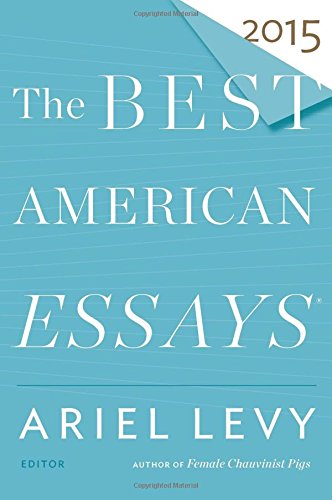
My essay, "Clouds and Rain over Three Gorges," is listed as a notable essay in the Best American Essays 2015.  This piece was the winner of American Literary Review's nonfiction contest last year,  and a finalist in Narrative's winter 2013 Story Contest.

Thursday, May 21, 2015

Poems After Poets

(Note:  I wrote poems in Chinese when I was young, and have also translated poetry from Chinese to English in recent years, but this is my first attempt to compose a few in English.)


Ambiguity
  After Gregory Corso

Her death
is as vivid
as memory
can evoke
and as blurred
as my memory
is to me


Layers of Sand
    After C. P. Cavafy

The memories of the current flow down in me
like fine sand sliding into a pit on the beach—
sun-warmed, glittering, and slippery fine sand

The memories of the past sink deeper,
cold layers of sand now hidden beneath;
some grains near the top still occasionally shine through,
shortly before being covered, out of the sun

I want to dig them up; their disappearance upsets me,
and I'm upset, too, for the mix-up from my digging.
I look in, at the topmost grains

I don't want to stop digging for fear the sand at the bottom
will start to turn into mud, and the mud take over the pit,
as quickly as the river water takes over the beach


Three Paradoxes
    After Wistawa Szymborska

When I speed across the intersection
I'm delayed, all cars deadlocked by mine

When I walk toward the horizon
I make it further away

When I look forward to tomorrow's sunlight
I come closer to the ultimate darkness


Wednesday, December 17, 2014

On Ezra Pound’s Translation of Ancient Chinese Poetry

Can one translate poetry without knowing the source language?  Certainly that was what Ezra Pound did.  In his volume Cathay (1915), Pound translates a total of 19 pieces of ancient Chinese poetry spanning a period from the 11th Century B.C. to 4th Century A.D.  But of course he couldn’t have done it without help from someone who had knowledge of the Chinese language, in this case Ernest Fenollosa, an American orientalist. The unusual situation, however, was that Pound was approached by Fenollosa’s wife after the man’s death.  At the time, in the 1910s-20s, English information about Chinese poetry must have been scarce, thus Pound’s only basis for the translation was Fenollosa’s meticulous unpublished notes. In addition to providing a word-by-word mapping between Japanese and English, the notes also include line-by-line draft translation into English.
Given Pound’s lack of knowledge of Chinese at the time, it is probably not a big surprise that Cathay contains quite a few citation errors. For example, the first poem in the collection, “Son of the Bowman of Shu,” is cited by Pound as from Kustugen (the Japanese name for Qu Yuan) in the 4th Century B.C., however it in fact is an anonymous work collected in Shijing (also known as Book of Songs), the earliest known volume of Chinese poetry.   Another example is the third poem, the famous “River Song.” Though correctly cited as from Li Bai (whom the Japanese called “Rihaku”), one of the most acclaimed poets in the Tang Dynasty, Pound had mistaken two poems as one.  The first 22 lines of “The River Song” correspond to a poem titled “江上吟” (“Humming on the River”), while the rest, starting from “The east wind brings the green color…”, correspond to a different poem by Li Bai titled “侍从宜春苑奉诏赋龙池柳色初青听新莺百嗽歌”, meaning literally “Following orders to write about listening to new birds singing in early spring, while serving the Emperor in Yichun Park” -- two completely different occasions in distinct settings.  It is curious that Pound would regard their contents as fitting perfectly in a single poem. There are a few other minor errors that I will skip here.
If the above errors are merely technical, wherever Fenollosa had missed the original Chinese meaning (though such occasions were few), the same problem also transferred into Pound’s “translation.”  Take “The River Merchant’s Wife: A Letter” as an example. In Li Bai's original poem, "长干行," there is this famous line that has since become a timeless allusion known as "bamboo horse and green plums":  
郎骑竹马来,绕床弄青梅。
Which Pound translated as (underlines are mine):
You came by on bamboo stilts, playing horse,
You walked about my seat, playing with blue plums.

Here, the word “” usually means “bed,” but in ancient Chinese it also means the fence of a backyard well. The latter meaning happens to be what Li Bai is referring to in this poem. Such language nuance can present difficulties for even a native speaker, not to mention a foreigner. Curiously, In Fenollosa’s notes the word is translated as “seat” instead of the usual meaning “bed.” He might not have known the other, less-common meaning of the word, and felt that “bed” wouldn’t have made sense: the first part of the line obviously refers to an outdoor setting.  Either “you walked about my seat” or “you walked about my bed” wouldn’t read right, but apparently Fenollosa went for the less nonsensical.  Pound might or might not have noticed this inconsistency, but there was not much he could do about it, being unable to read the original text. In any case, a glitch like this could probably be explained away by “poetic license.” So the error is kept.  In the same line, “blue plums” should actually be “green plums,” indicating the fruits are unripe, a metaphor for the young girl and boy.  This metaphor is completely lost in the translation.  
Another interesting thing to note is that the original poem alludes to an allegory known as “Holding-pillar faith,” which originates from a book by ancient Chinese philosopher Zhuangzi. The allegory goes like this:  a man is waiting for his female date under a bridge. Before the woman arrives, however, the river water unexpectedly rises. To be faithful to his promise, the man doesn’t leave; he holds onto a pillar of the bridge until he drowns.  The moral of this allegory is one can place love above his own life. Li Bai's lines that allude to this

十五始展眉,愿同尘与灰。
常存抱柱信,岂上望夫台。

were translated by Pound as

At fifteen I stopped scowling, 
I desired my dust to be mingled with yours 
Forever and forever and forever. 
Why should I climb the look out? 

In Fenollosa's notes, he had written a draft translation “I always had in me the faith of holding to pillars / And why should I think of climbing the husband looking out terrace.”  This is quite accurate literally; however it is unclear whether he was aware of the allusion. In any case he did not explain it. At this point Pound, who had faithfully followed Fenollosa’s translation so far, took the liberty to exclude that line completely, probably because he couldn’t make sense of it.  In its place he put “Forever and forever and forever.” The meaning of “forever” was indeed implied by Li Bai in his poem, but the great Chinese poet would never have said it so tritely; that would not be his poetic style. 
This example is one of a few places where Pound's translation departs from Fenollosa’s notes.  Reading the two men’s translations side by side for this poem, one can see that Pound  copied Fenollosa’s complete lines more often than not. T.S. Eliot said in a 1928 essay that “There is as much as to say that Chinese poetry, as we know it today, is something invented by Ezra Pound.”  It seems to me in that statement Ernest Fenollosa’s name should have at least been in line with, if not replacing, Ezra Pound’s.
Interestingly, Pound’s translation of the Chinese poetry – or should I say Fenollosa’s translation instead? – especially of the longer poems, often reads more fluid than what I’ve seen from ethnic Chinese translators.  Let’s compare two different translations of the first poem included in Cathay
---------------------------------------
The Chinese original:
采薇

采薇采薇 薇亦作止
曰归曰归 岁亦莫止
靡室靡家 玁狁之故
不遑启居 玁狁之故

采薇采薇 薇亦柔止
曰归曰归 心亦忧止
忧心烈烈 载饥载渴
我戍未定 靡使归聘

采薇采薇 薇亦刚止
曰归曰归 岁亦阳止
王事靡盬 不遑启处
忧心孔疚 我行不来

彼尔维何 维常之华
彼路斯何 君子之车
戎车既驾 四牡业业
岂敢定居 一月三捷

驾彼四牡 四牡骙骙
君子所依 小人所腓
四牡翼翼 象弭鱼服
岂不日戒 玁狁孔棘

昔我往矣 杨柳依依
今我来思 雨雪霏霏
行道迟迟 载渴载饥
我心伤悲 莫知我哀
---------------------------------
Ezra Pound's translation:
SONG OF THE BOWMAN OF SHU

Here we are, picking the first fern-shoots 
And saying: When shall we get back to our country? 
Here we are because we have the Ken-nin for our foemen, 
We have no comfort because of these Mongols. 

We grub the soft fern-shoots, 
When anyone says "Return," the others are full of sorrow. 
Sorrowful minds, sorrow is strong, we are hungry and thirsty. 
Our defense is not yet made sure, no one can let his friend return. 

We grub the old fern-stalks. 
We say: Will we be let to go back in October? 
There is no ease in royal affairs, we have no comfort. 
Our sorrow is bitter, but we would not return to our country. 

What flower has come into blossom? 
Whose chariot? The General's. 
Horses, his horses even, are tired. They were strong. 
We have no rest, three battles a month.

By heaven, his horses are tired. 
The generals are on them, the soldiers are by them. 
The horses are well trained, the generals have ivory arrows and quivers ornamented with   fish-skin. 
The enemy is swift, we must be careful. 

When we set out, the willows were drooping with spring, 
We come back in the snow, 
We go slowly, we are hungry and thirsty,
Our mind is full of sorrow, who will know of our grief?
--------------------------------

A translation by Yang Yixian and Dai Naidie, from A Choice Selection of Ancient PoemsChinese—English, published by Foreign Language Press in China:

We Gather Vetch

We gather vetch, gather vetch,
While the young shoots are springing;
Oh, to go back, go back;
But the year is ending.
We have no house, no home,
Because of the Huns.
We cannot sit or take rest,
Because of the Huns.

We gather vetch, gather vetch,
While the shoots are tender;
Oh, to go back, go back;
Our hearts are sad.
Our sad hearts burn,
And we hunger and thirst;
But our garrison duty drags on,
And no messenger goes to take news home.

We gather vetch, gather vetch,
But the shoots are tough;
Oh, to go back, go back;
The tenth month is here again,
But the king’s business is unending;
We cannot sit or take rest;
Our sad hearts are racked with pain,
And no one comes to comfort us on our march.

What splendid blossom is that?
It is the blossom of the cherry tree.
What great chariot is that?
It is the chariot of a nobleman.
His war-chariot stands ready yoked
With four proud stallions;
How can we settle in one place?
We march to three different posts in a month.
           
The four stallions are yoked
To make a sturdy team;
The nobleman rides in the chariot,
We take cover behind;
Four stately stallions,
Ivory bow-ends and a fish-skin quiver;
Every day we must be on our guard,
We are hard-pressed by the Huns.

When we left home
The willows were softly swaying;
Now as we turn back
Snowflakes fly.
Our road is a long one
And we thirst and hunger,
Our hearts are filled with sorrow;
But who knows our misery?
--------------------
The translators were/are all literary experts in their own native language.  However, when it comes to translation, neither party appears to have sufficient knowledge of the nuance of the other language.  Though both translations are fairly accurate in meaning, they read quite differently as poetry.
This Chinese poem, "采薇," from the 11th Century B.C., laments soldiers’ homesickness as they guard their kingdom’s border against nomad invaders from spring to winter. Its meaning is straightforward and there are no allusions, but like other poems in Shijing, this one maintains a singing/chanting rhythm throughout, in which a refrain occurs often, not only between stanzas but also within a line.    
The Chinese translators certainly understood the form and meaning of this poem better than Pound, and their translation attempts to render the folk song quality with the refrain pattern.  However their English is not nuanced enough to match their Chinese level of artistic quality.  For example, admittedly nitpicking: using “to go back” without context is a common Chinglish way of expressing “returning home.” It is rather unclear here and could lead to basic misunderstanding of the literal meaning. In comparison, Pound’s translation has lost the original poem’s style and folk-song quality, but reads much more fluid and natural (and "get back to our country" quite clear).  This is to say, each translation has its own strengths and weaknesses. This also implies that, it is possible to keep the strength of each and avoiding many of the weaknesses by combining the two.
Consider a modified version that blends the above two translations and fixes their errors. For the sake of the sounds, I'm adopting the word "vetch" for , since there are so many interpretations for what this wild vegetable actually is/was – spinach, wild peas, fern shoots, vetch, etc., you name it – and I have no way to tell which is most accurate. For similar reasons, I'm keeping "Xianyun" from the original poem for the name of the "foemen" tribe.

Picking vetch, picking vetch, the first shoots are springing
Saying “Return,” saying “Return,” the year is already ending
No family, no home, because of Xianyun the foemen
No rest, no comfort, because of Xianyun the foemen

Picking vetch, picking vetch, the shoots are soft and fresh
Saying “Return,” saying “Return,” our hearts are full of sorrow
Sorrowful minds, sorrow is burning us, so is hunger, so is thirst
Our defense is not yet certain, no one can be sent home

Picking vetch, picking vetch, the shoots are getting tough
Saying “Return,” saying “Return,” it is October already the tenth moon
No ease in the king’s affairs, no break for us
Our hearts pain with sorrow, we still can’t go home 

What fabulous blossom is that?  It is the cherry tree’s
Whose great chariot is that? It is the general’s
The war-chariot is yoked, the four horses are tall
No one dares rest, three battles a month

Four horses are driving the chariot, four strong horses
The higher men are on them, the lower men are by them 
The horses are well trained, bows of ivory, quivers ornamented with fish-skin 
No one dares relax, the enemy is swift 

When we set out, the willows were drooping with spring 
When we come back, snowflakes fly everywhere
We go slowly, we are hungry and thirsty
Our mind is full of sorrow, who will know our misery?

If my modified version above is indeed an improvement in the translation, then a case can might be made that better literary translation would be a cooperative project between two translators, one a native speaker and expert of the source language, and the other the target language.  Only in this way, can the nuances in both languages be captured and presented in the translation.  This, of course, is mainly for the benefit of readers and the quality of the translated literature.  I do understand that not every translator would be willing to share his or her work or cooperate with another translator.
            

Monday, February 10, 2014

What Foreigners Do in China

(Also published on LARB's China Blog)

In the remote mountains of Yunnan Province, China, a middle-aged European ecologist gave up his high-level international program manager job and made his home with a local woman. Together, they set forth to reestablish the rainforests destroyed by rubber tree plantations, cultivated a garden — a seed bank — that “was home to more species than all of Germany,” reintroduced indigenous plant species to China, and homeschooled two bright young children with knowledge, poise and manners belying their age. In 2010, the extraordinary life of the ecologist, along with the draft of an unconventional paper that could “be of enormous value to mankind,” was cut short by a heart attack.

This story about Josef Margraf, written by journalist Jonathan Watts, is not a news report or profile but rather an essay, moving for both Watts’ own introspection and his sketch of Margraf’s life. I read it in the anthology Unsavory Elements —Stories of Foreigners on the Loose in China, in which editor Tom Carter has assembled 28 short contributions by a variety of expat writers. I had opened the book with the intention of browsing through it quickly. Though I was curious about how expats live in China, and why there are so many of them now, as a Chinese writer with a certain cynicism, I did not expect to find anything truly surprising. But surprised I was, and my own stereotypical presumptions stand corrected.

In 1971, when I was a middle school student in the city of Chongqing, recruiters dressed in military uniforms from the faraway Yunnan Production and Construction Corps — a more attractive name, I suppose, than “rubber plantations” to teenagers at the time — arrived at my campus and called on students to join them “guarding the frontier and cultivating the borderland.” Many of us, me included, applied with youthful enthusiasm, and almost everyone I knew who applied got their wish. I was spared because I was under-aged and also because some insightful adults, who viewed higher education as more important than planting rubber trees, stood in my way. In all, about 100,000 middle school students were collected from the cities of Beijing, Shanghai, Chongqing, Chengdu, and Kunming and sent to labor in Yunnan’s rubber plantations. The collective name for those young people was “Zhiqing,” or “Educated Youth.” Seven years of hardship and many tragic stories later, in the winter of 1978-79, those Zhiqing launched a spontaneous mass rally that has since been termed the “big return-to-city storm,” which eventually did bring them home. By then I, as one of the lucky few, had entered my second year in university, but my middle school friends who went to Yunnan missed their chance not only for university, but even for a high school education.

I had thought that the wasted youth of my 100,000 contemporaries qualified as the biggest damage caused by the rubber plantations, and that an end had been put to the practice in early 1979. Not until reading Watts’ chapter did I realize with a shock that the rubber plantations have been expanding during China’s recent economic boom and have gone on to become one of “China’s greatest ecological disasters.” The invasive species eats away at the region’s fertility and diversity, changes weather conditions and rainfall, and threatens to wipe out China’s only tropical rainforest. Many friends from my youth, through their goodwill and hard work, had unknowingly contributed to the disaster while also bringing short-term benefits to China’s industries.

In his essay titled “Invasive Species,” Watts also points out that, ironically, it was Europeans who brought rubber trees and monocultural practices to China more than a century ago. As a European himself, Josef Margraf’s effort thus could be viewed as “looking to the future by making up for the past wrongs.” “I think Josef has achieved more than any foreigner I had met,” says Watts, who also wonders loudly, “weren’t we too part of a kind of invasive species?”

Nowadays, there are over one million foreigners living in China, “many of whom are in effect economic refugees,” says Tom Carter in his introduction. The exponential growth of foreign residents compared to the late 1980s, when I first met my American husband in Chengdu, alone illustrates the now tried and true cliché “look how much China has changed!” Chinese readers of my generation, however, might also find in the book more than a few things that are unchanged, sometimes in unexpected corners. Dominic Stevenson, who fits more into the category of adventurer than economic refugee, left a comfortable life in Bangkok for China, but ended up spending two years in a Shanghai prison for being a hash smuggler along the ancient Silk Road. Stevenson’s essay, titled “Thinking Reports,” provides a rare glance at life as a foreign prisoner. A bizarrely familiar scene described in the chapter is probably unfamiliar to today’s young generation of Chinese: Stevenson and his cellmates are required to write “thought reports,” a maddening practice prevalent in the Cultural Revolution years that had “reformed” more than a few otherwise noble men into despicable informants betraying their friends. The suspense of Stevenson’s story is thus how he, a liberal-minded foreigner, will react to such a request. I can only hope the practice of “thought reporting” preserved in a prison is not going to reappear in Chinese society at large, a dreadful outlook no longer unthinkable under Xi Jinping’s rule.

But I might be too pessimistic. Simon Winchester takes my emotional ride with the expat experiences to a high point in his epilogue, where he is stuck in the void of western China’s desert alone with his dead car, toying with the prospect of perishing. “Except.” Following this emphatic pause is a cellphone signal, and his rescue because of it. “The Chinese build their infrastructure well these days, and one of the first things they have created in making their new nationwide transportation system — long before finishing the roads — is a cell phone network.” I might not agree with the author’s conclusion that China has become so successful today “precisely because it [is] not a casually planned society any more,” but that does not stop me from being in a celebratory mood when reading about a man’s life saved by China’s modern telecommunication infrastructure. This despite my own support for a neighborhood protest against the building of another cellular tower in our Boston suburb.

While my contradictory attitude might be explained away by the Chinese adage This is one time, that was another, Graham Earnshaw’s chapter “Playing in the Gray” tells a story eerily reminiscent of an earlier time. In 1872, a British businessman named Ernest Major launched one of the first and most prominent Chinese newspapers, Shen Pao, in Shanghai, which went on to lay the foundation for modern Chinese newspapers and continued publication for 77 years, until the Communists took over Shanghai in May 1949. Half a century later, in 1998, Earnshaw, again a Briton, again in Shanghai, founded “the first independent weekly English-language newspaper to be produced in Shanghai since the communist takeover in 1949.” “Sure, it was illegal. It had no publication license, its content was not reviewed by the Propaganda Bureau ahead of publication, and we had no right to print or distribute. But we did it anyway.” This fascinating experience led Earnshaw to believe China is a place where “nothing is allowed but everything is possible.”

Perhaps that is one of the major attractions of the Middle Kingdom. In an interview with Business Insider, Tom Carter was asked, “Do you think that the influence of foreigners on China is a good thing?” and he answered, “All things considered, I think China is more of an influence on the expats who live here than we are on it…” Circling back to the story about Josef Margraf, the influences work both ways, and every person has a different story to tell. I ended up reading through Unsavory Elements page by page, story by story, on the train to work in the morning and, when I was lucky enough to find a seat, on the way home in the evening as well. It is an uneven book, as might be expected of any anthology. There are a few stories that come across as condescending, sentimental, or dull. But the majority of them are captivating and, as a whole, the book is unexpectedly wide-ranging, thought-provoking, and entertaining.

Monday, November 4, 2013

"Better to Let Half of the People Die," said Mao?

http://www.amazon.com/Tombstone-Great-Chinese-Famine-1958-1962/dp/0374277931
Nearly two years ago, when I translated Yang Jisheng's response to Dikötter's strange comments on Tombstone, I said I was intensely interested to find out whether Mao really said "It is better to let half of the people die so that the other half can eat their fill," and if he did, in what context.  I received a couple of clues, but none provided the complete context, and I have been left wondering since. I even sent an email to Yang Jisheng asking if he knew about this Mao quote, but did not hear back – perhaps the email address I got from a journalist friend was no longer valid.

Amazingly, last week the answer came to me by accident, as I was reading a scholarly article written by Anthony Garnaut, a historian at Oxford, published in the journal China Information. 

In his article, "Hard facts and half-truths: The new archival history of China's Great Famine," Garnaut finds out that the Mao quote in question is not from a speech Mao delivered on March 25, 1959 as Dikötter claims, but it represents an impromptu response Mao made to Bo Yibo's report on the implementation of the industrial plan in the days that followed. "The comment is preceded by several remarks by Mao about Party oversight of the industrial sector, none of which touch upon agriculture or rural welfare." Mao was weighing in on how many projects should be undertaken to accomplish the plan set forth in Bo's report. Mao says:

If we want to fulfill the plan, then we need to greatly reduce the number of projects. We need to be resolute in further cutting the 1,078 major projects down to 500. (要完成计划,就要大減项目。1078个项目中还应該堅決地再多削減,削到500个。)

To distribute resources evenly is a way to sabotage the Great Leap Forward. (平均使用力量是破坏大跃进的办法。)

If all are unable to eat their fill, then all will die. It is better for half to die, so that half of the people can eat their fill. (大家吃不飽,大家死,不如死一半,給一半人吃飽。)

"The ‘people’ whom Mao was willing to let die of starvation turn out to be not people at all," Garnaut concludes, "but large-scale industrial projects."

I'm glad this fact is clarified, not because it mitigates Mao's guilt (it doesn't), but it supports the conclusion I reached in my LARB review of the two books by Yang and Dikötter respectively, that "the catastrophe was not a deliberate act of mass murder like the Holocaust, as Dikötter suggests. Rather, it was the result of policy failures from a governance system based on the control of ideology and information." This distinction is important if there are any lessons to be learned for today's leaders.

Another China scholar once wrote me – after reading my LARB review – that Mao's
monstrous moral failing was not in the motivation of starting the Great Leap Forward which turned out to be disastrous, but in his attitude toward criticism of his policies in the aftermath. I couldn't agree more with this assessment.

A question remains:  did Dikötter know what Mao meant but intentionally misinterpret it for wanting a smoking gun, or was his Chinese not good enough for him to know what he was doing?

By the way, Garnaut's article also analyzes Dikötter's repeated assaults on Yang Jisheng and his unacknowledged use of Yang's research results. I must say that, to date I still don't quite understand Dikötter's motivation in turning around on someone who had helped him generously with his research.