(Also published on LARB's China Blog)
In the remote mountains of Yunnan Province, China, a middle-aged
European ecologist gave up his high-level international program manager
job and made his home with a local woman. Together, they set forth to
reestablish the rainforests destroyed by rubber tree plantations,
cultivated a garden — a seed bank — that “was home to more species than
all of Germany,” reintroduced indigenous plant species to China, and
homeschooled two bright young children with knowledge, poise and manners
belying their age. In 2010, the extraordinary life of the ecologist,
along with the draft of an unconventional paper that could “be of
enormous value to mankind,” was cut short by a heart attack.
This story about Josef Margraf, written by journalist Jonathan Watts,
is not a news report or profile but rather an essay, moving for both
Watts’ own introspection and his sketch of Margraf’s life. I read it in
the anthology Unsavory Elements —Stories of Foreigners on the Loose in China,
in which editor Tom Carter has assembled 28 short contributions by a
variety of expat writers. I had opened the book with the intention of
browsing through it quickly. Though I was curious about how expats live
in China, and why there are so many of them now, as a Chinese writer
with a certain cynicism, I did not expect to find anything truly
surprising. But surprised I was, and my own stereotypical presumptions
stand corrected.
In 1971, when I was a middle school student in the city of Chongqing,
recruiters dressed in military uniforms from the faraway Yunnan
Production and Construction Corps — a more attractive name, I suppose,
than “rubber plantations” to teenagers at the time — arrived at my
campus and called on students to join them “guarding the frontier and
cultivating the borderland.” Many of us, me included, applied with
youthful enthusiasm, and almost everyone I knew who applied got their
wish. I was spared because I was under-aged and also because some
insightful adults, who viewed higher education as more important than
planting rubber trees, stood in my way. In all, about 100,000 middle
school students were collected from the cities of Beijing, Shanghai,
Chongqing, Chengdu, and Kunming and sent to labor in Yunnan’s rubber
plantations. The collective name for those young people was “Zhiqing,”
or “Educated Youth.” Seven years of hardship and many tragic stories
later, in the winter of 1978-79, those Zhiqing launched a spontaneous
mass rally that has since been termed the “big return-to-city storm,”
which eventually did bring them home. By then I, as one of the lucky
few, had entered my second year in university, but my middle school
friends who went to Yunnan missed their chance not only for university,
but even for a high school education.
I had thought that the wasted youth of my 100,000 contemporaries
qualified as the biggest damage caused by the rubber plantations, and
that an end had been put to the practice in early 1979. Not until
reading Watts’ chapter did I realize with a shock that the rubber
plantations have been expanding during China’s recent economic boom and
have gone on to become one of “China’s greatest ecological disasters.”
The invasive species eats away at the region’s fertility and diversity,
changes weather conditions and rainfall, and threatens to wipe out
China’s only tropical rainforest. Many friends from my youth, through
their goodwill and hard work, had unknowingly contributed to the
disaster while also bringing short-term benefits to China’s industries.
In his essay titled “Invasive Species,” Watts also points out that,
ironically, it was Europeans who brought rubber trees and monocultural
practices to China more than a century ago. As a European himself, Josef
Margraf’s effort thus could be viewed as “looking to the future by
making up for the past wrongs.” “I think Josef has achieved more than
any foreigner I had met,” says Watts, who also wonders loudly, “weren’t
we too part of a kind of invasive species?”
Nowadays, there are over one million foreigners living in China,
“many of whom are in effect economic refugees,” says Tom Carter in his
introduction. The exponential growth of foreign residents compared to
the late 1980s, when I first met my American husband in Chengdu, alone
illustrates the now tried and true cliché “look how much China has
changed!” Chinese readers of my generation, however, might also find in
the book more than a few things that are unchanged, sometimes in
unexpected corners. Dominic Stevenson, who fits more into the category
of adventurer than economic refugee, left a comfortable life in Bangkok
for China, but ended up spending two years in a Shanghai prison for
being a hash smuggler along the ancient Silk Road. Stevenson’s essay,
titled “Thinking Reports,” provides a rare glance at life as a foreign
prisoner. A bizarrely familiar scene described in the chapter is
probably unfamiliar to today’s young generation of Chinese: Stevenson
and his cellmates are required to write “thought reports,” a maddening
practice prevalent in the Cultural Revolution years that had “reformed”
more than a few otherwise noble men into despicable informants betraying
their friends. The suspense of Stevenson’s story is thus how he, a
liberal-minded foreigner, will react to such a request. I can only hope
the practice of “thought reporting” preserved in a prison is not going
to reappear in Chinese society at large, a dreadful outlook no longer
unthinkable under Xi Jinping’s rule.
But I might be too pessimistic. Simon Winchester takes my emotional
ride with the expat experiences to a high point in his epilogue, where
he is stuck in the void of western China’s desert alone with his dead
car, toying with the prospect of perishing. “Except.” Following this
emphatic pause is a cellphone signal, and his rescue because of it. “The
Chinese build their infrastructure well these days, and one of the
first things they have created in making their new nationwide
transportation system — long before finishing the roads — is a cell
phone network.” I might not agree with the author’s conclusion that
China has become so successful today “precisely because it [is] not a
casually planned society any more,” but that does not stop me from being
in a celebratory mood when reading about a man’s life saved by China’s
modern telecommunication infrastructure. This despite my own support for
a neighborhood protest against the building of another cellular tower
in our Boston suburb.
While my contradictory attitude might be explained away by the Chinese adage This is one time, that was another,
Graham Earnshaw’s chapter “Playing in the Gray” tells a story eerily
reminiscent of an earlier time. In 1872, a British businessman named
Ernest Major launched one of the first and most prominent Chinese
newspapers, Shen Pao, in Shanghai, which went on to lay the
foundation for modern Chinese newspapers and continued publication for
77 years, until the Communists took over Shanghai in May 1949. Half a
century later, in 1998, Earnshaw, again a Briton, again in Shanghai,
founded “the first independent weekly English-language newspaper to be
produced in Shanghai since the communist takeover in 1949.” “Sure, it
was illegal. It had no publication license, its content was not reviewed
by the Propaganda Bureau ahead of publication, and we had no right to
print or distribute. But we did it anyway.” This fascinating experience
led Earnshaw to believe China is a place where “nothing is allowed but
everything is possible.”
Perhaps that is one of the major attractions of the Middle Kingdom. In an interview with Business Insider,
Tom Carter was asked, “Do you think that the influence of foreigners on
China is a good thing?” and he answered, “All things considered, I
think China is more of an influence on the expats who live here than we
are on it…” Circling back to the story about Josef Margraf, the
influences work both ways, and every person has a different story to
tell. I ended up reading through Unsavory Elements page by
page, story by story, on the train to work in the morning and, when I
was lucky enough to find a seat, on the way home in the evening as well.
It is an uneven book, as might be expected of any anthology. There are a
few stories that come across as condescending, sentimental, or dull.
But the majority of them are captivating and, as a whole, the book is
unexpectedly wide-ranging, thought-provoking, and entertaining.
Monday, February 10, 2014


Monday, November 4, 2013
"Better to Let Half of the People Die," said Mao?

Amazingly, last week the answer came to me by accident, as I
was reading a scholarly article written by Anthony Garnaut, a historian at
Oxford, published in the journal China Information.
In his article,
"Hard facts and
half-truths: The new archival history of China's Great Famine," Garnaut finds out that the Mao quote in question is not from a speech Mao delivered on March 25, 1959 as Dikötter
claims, but it represents an impromptu response Mao made to Bo Yibo's
report on the implementation of the industrial plan in the days that followed. "The
comment is preceded by several remarks by Mao about Party oversight of the
industrial sector, none of which touch upon agriculture or rural welfare."
Mao was weighing in on how many projects should be undertaken to accomplish the
plan set forth in Bo's report. Mao says:
If we want to fulfill the plan, then we need to greatly reduce the
number of projects. We need to be resolute in further cutting the 1,078 major
projects down to 500. (要完成计划,就要大減项目。1078个项目中还应該堅決地再多削減,削到500个。)
To distribute resources evenly is a way to sabotage the Great Leap
Forward. (平均使用力量是破坏大跃进的办法。)
If all are unable to eat their fill, then all will die. It is better
for half to die, so that half of the people can eat their fill. (大家吃不飽,大家死,不如死一半,給一半人吃飽。)
"The ‘people’ whom Mao was willing to let die of
starvation turn out to be not people at all," Garnaut concludes, "but
large-scale industrial projects."
I'm glad this fact is clarified, not because it mitigates
Mao's guilt (it doesn't), but it supports the conclusion I reached in my LARB review
of the two books by Yang and Dikötter respectively, that "the catastrophe was not a deliberate
act of mass murder like the Holocaust, as Dikötter suggests. Rather, it was the
result of policy failures from a governance system based on the control of
ideology and information." This distinction is important if there are any
lessons to be learned for today's leaders.
Another China scholar once wrote me – after reading my LARB review – that Mao's
monstrous moral failing was not in the
motivation of starting the Great Leap Forward which turned out to be disastrous,
but in his attitude toward criticism of his policies in the aftermath. I couldn't agree more
with this assessment.A question remains: did Dikötter know what Mao meant but intentionally misinterpret it for wanting a smoking gun, or was his Chinese not good enough for him to know what he was doing?
By the way, Garnaut's article also analyzes Dikötter's repeated assaults on Yang
Jisheng and his unacknowledged use of Yang's research results. I must say that,
to date I still don't quite understand Dikötter's motivation in turning around
on someone who had helped him generously with his research.
Sunday, September 15, 2013
Reviews of Unsavory Elements

I also plan to write a review myself, and I can tell you beforehand that I honestly enjoyed reading most of the book. But since translation issues will be beyond the scope of my review, here I'd like to briefly discuss the translation of two Chinese phrases, which I happened to encounter in two of my favorite stories in the book.
"思想汇报" -- in the book it's translated as "thinking reports," but "thought reports" might be more accurate, and read better.
"哪里哪里" -- as a modest response to praises, this is humorously translated as "Where? where?" in the book. If you have read my posts on translation before, you would know I'm often in favor of literal translation, but here I agree with one of the book reviewers below that "Nah, nah" would be a better rendition. Note also that the question marks don't exist in the original Chinese phrase. As a bilingual reader I enjoyed and appreciate the writer's humor, but for English readers who don't know Chinese the confusion caused by "Where? where?" might trump the humorous effect.
Now, here is my compilation of reviews as well as interviews with Tom Carter the editor, in reverse chronological order of their publication dates --
(Updated 11/5)
TheAtlantic.com, Nov. 5, 2013
http://www.theatlantic.com/china/archive/2013/11/unsavory-elements-on-foreign-lives-in-contemporary-china/281144/
LA Review of Books, Sept. 25, 2013
http://tumblr.lareviewofbooks.org/post/62262869667/foreign-elements-a-q-a-with-photographer
The Peking Duck, Sept. 13, 2013
http://www.pekingduck.org/2013/09/unsavory-elements-edited-by-tom-carter-2/
Caixin Online, Aug. 24, 2013
http://english.caixin.com/2013-08-24/100573568.html
Asian Review of Books, Aug. 17, 2013
http://www.asianreviewofbooks.com/new/?ID=1545
Business Insider, Aug. 2, 2013
http://www.businessinsider.com/unsavory-elements-by-tom-carter-2013-8
TheNanfang.com, July 22, 2013
http://www.thenanfang.com/blog/unsavory-elements-and-the-changing-nature-of-being-an-expat-in-china/
That's, June 17, 2013
http://www.thatsmags.com/beijing/articles/15499
Chengdu Living, June 1, 2013
http://www.chengduliving.com/unsavory-elements-in-chengdu/
The Beijing Cream, May 21, 2013
http://beijingcream.com/2013/05/unsavory-elements-the-good-the-bad-and-the-boring-foreigners-of-china/
Beijing Bookworm: "A Q&A with Tom Carter," May 21, 2013
http://beijingbookworm.com/between-the-stacks/unsavory-elements-a-qa-with-tom-carter/
Time Out Shanghai, May 10, 2013
http://www.timeoutshanghai.com/features/Books__Film-Book_reviews/11883/Unsavory-Elements.html
The Beijinger, May 9, 2013
http://www.thebeijinger.com/blog/2013/05/09/book-review-unsavory-elements-stories-foreigners-loose-china
Shanghaiist, May 8, 2013
http://shanghaiist.com/2013/05/08/review_unsavory_elements_earnshaw_books_tom_carter.php
Sunday, March 31, 2013
Reading: Harper's on Bo Xilai
For much of 2012, the year of China's political earthquake,
I waited to read Harper's analysis of
the Bo Xilai saga, but never got the chance. As a long-time subscriber, I'm
glad to see a report this year, even if it's a bit late. In her informative article "The
Unraveling of Bo Xilai – China loses a populist star," Lauren Hilgers provides
balanced coverage of the divided public opinions on Bo, and convincingly shows
how information unavailability helped to veil the fact that a Chinese politician
who once appeared to be the most accessible "had been no more candid than
any other Party secretary."
I completely agree with Hilgers that officialdom opacity is a
big problem in China and, as I've discussed
before, different social classes have different level of access to information.
But her article sparked more thoughts. Suppose all the social classes received
the same amount of information about Bo Xilai, would their positions toward him
converge? I doubt it.
Chongqing, where Bo Xilai last ruled, is my hometown and I
visit it often. There has been a heavy divide between the locals even when
confronted with the same promulgated information. Intellectuals I spoke to disliked Bo's
behavior and policies long before his downfall; this is consistent with
Hilgers' report. Many low-income, less-educated
people, on the other hand, continue to advocate Bo even after his dark side has
been exposed and the initial stage of disbelief has passed. What's interesting
– and also alarming – is the latter's reasoning. So what if Bo was corrupt? They
say, Which official in China is not? But
the others are corrupt AND incompetent, while Bo was capable of getting
something done. So what if Bo's "Chongqing model" was causing local
government bankruptcy? Certainly it is a
lot better to spend the money on local construction than let it fall into the
pockets of corrupt officials. And, so what if Bo Xilai and Wang Lijun carried
out cruel torture, unjust executions, and massive imprisonments of private
businessmen and political dissenters during their "anti-mafia" campaign? Since ancient times, "killing the rich
to benefit the poor" has been justified.
So, the most urgent and fundamental problem as seen by the
two groups of people is different. To those with low-income, it is the wealth
gap. To liberal intellectuals, it is the
rule of law. Both are legitimate concerns, and both should be addressed. Bo, however, for his own self-serving agenda
chose to play the game of favoring one and trampling the other. While it is
clear that he placed himself above the law during his rule in Chongqing, there
is no evidence that his populist policies (the so-called "Chongqing model")
actually reduced the wealth gap; further, the face engineering that pleased his
supporters is unsustainable, as it was implemented with heavy borrowing that has
put Chongqing's finances into dire straits. In fact, what the current division
in public opinion reflects is that the Bo incident has become an anchor from
which both sides can vent their discontent.
Hilgers also touches on a very interesting phenomenon:
"[T]here were two groups who disliked Bo
Xilai: Party leaders and liberal intellectuals." I wish the author had explored this
coincidence a bit further. When groups we think of as critical of Chinese
authority find themselves on the same side of some issue, this is worth analyzing and understanding. But I realize it is also beyond the scope of Hilgers’ article.
Sunday, February 24, 2013
Foreign Literature in China: Now and Then
In LARB: In the Wake of Finnegan: A Q & A with Xujun Eberlein
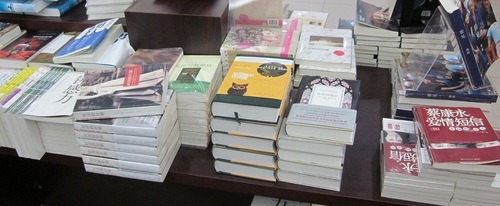
This week’s Q & A is with the China-born and now Boston-based Xujun Eberlein, a short story writer, blogger, essayist, and contributor to LARB.
I contacted Xujun in part simply because I was curious to learn her reaction to two recent literary-minded and China-focused New York Times pieces. One focused on the surprisingly brisk sales in China of a book by James Joyce, while the other was a commentary by NPR Beijing bureau chief Louisa Lim on trends in censorship and the popularity of Chinese “officialdom novels.” Both brought Xujun to mind, since she has often reflected on the flow of books and ideas between China and the West and she has written an essay on the “officialdom novel” genre.
She was good enough to break up her Lunar New Year trip back to Chongqing to speak with me.
Jeff Wasserstrom: Do you have any thoughts on why Finnegans Wake might be selling so well in China?
Xujun Eberlein: I was curious about this myself. I’m in Chongqing for Chinese New Year and I went to the Xinhua Bookstore downtown on Saturday (February 9) to have a look at the book. A young staff member led me to the desk where the Chinese translation of Finnegans Wake (the yellow cover at the center of the above photo) was on display with other new and noteworthy books. As you may see from the photo, next to Finnegans Wake is the translation of polish novelist Henryk Sienkiewicz’s Quo Vadis, which has a supplementary band to note the author is a Nobel Laureate. The red cover on the right is a Chinese popular novel titled Love SMSs. I asked the young man how Finnegans Wake was selling there and he said “Not bad.” He noted that its sales were similar to One Hundred Years of Solitude and Love in the Time of Cholera. When asked what kind of readers were buying it, he said “mostly young people.”
Read more.
This week’s Q & A is with the China-born and now Boston-based Xujun Eberlein, a short story writer, blogger, essayist, and contributor to LARB.
I contacted Xujun in part simply because I was curious to learn her reaction to two recent literary-minded and China-focused New York Times pieces. One focused on the surprisingly brisk sales in China of a book by James Joyce, while the other was a commentary by NPR Beijing bureau chief Louisa Lim on trends in censorship and the popularity of Chinese “officialdom novels.” Both brought Xujun to mind, since she has often reflected on the flow of books and ideas between China and the West and she has written an essay on the “officialdom novel” genre.
She was good enough to break up her Lunar New Year trip back to Chongqing to speak with me.
Jeff Wasserstrom: Do you have any thoughts on why Finnegans Wake might be selling so well in China?
Xujun Eberlein: I was curious about this myself. I’m in Chongqing for Chinese New Year and I went to the Xinhua Bookstore downtown on Saturday (February 9) to have a look at the book. A young staff member led me to the desk where the Chinese translation of Finnegans Wake (the yellow cover at the center of the above photo) was on display with other new and noteworthy books. As you may see from the photo, next to Finnegans Wake is the translation of polish novelist Henryk Sienkiewicz’s Quo Vadis, which has a supplementary band to note the author is a Nobel Laureate. The red cover on the right is a Chinese popular novel titled Love SMSs. I asked the young man how Finnegans Wake was selling there and he said “Not bad.” He noted that its sales were similar to One Hundred Years of Solitude and Love in the Time of Cholera. When asked what kind of readers were buying it, he said “mostly young people.”
Read more.
Friday, February 22, 2013
"Skylark": a Translated Story
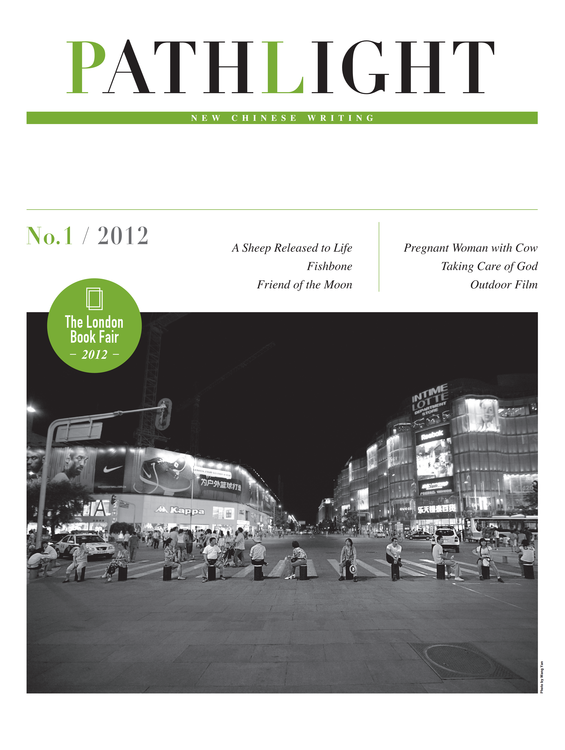 (Note: This is a short story I translated for Pathlight issue No. 1, 2012, posted here with permission. I had not heard about
author Jin Renshun before I got the assignment. Her writing is both beautiful and
subtle, and I truly enjoyed translating the piece. I tried to be faithful to
her original style and hope I've succeeded somewhat. – Xujun)
(Note: This is a short story I translated for Pathlight issue No. 1, 2012, posted here with permission. I had not heard about
author Jin Renshun before I got the assignment. Her writing is both beautiful and
subtle, and I truly enjoyed translating the piece. I tried to be faithful to
her original style and hope I've succeeded somewhat. – Xujun)Jin Renshun: Born in 1970 of Korean extraction, and now living in Changchun, Jin Renshun has published the novel Spring Fragrance, the short story collections Cold Front of Love, Moonlight Oh Moonlight, One Another, and The Glass Café, and the essay collections Like a Dream in Broad Daylight and Poisonous Beauties. Her work has been translated into Japanese, English. German and Korean. In 2010 she attended the University of Iowa’s International Writing Program.
Skylark
by Jin Renshun
Each day at dusk, from six to eight, the third table by the
window was reserved for Kang Joon-Hyuk. Occasionally he brought friends –
perhaps employees – with him, but mostly he came alone, magazine in hand, to
read a few pages before the dishes were served. He and Chun Feng spoke every
day, but nothing beyond her asking what he’d like and his ordering of dishes,
followed by a few pleasantries of the “Thanks,” “You are welcome” sort.
One day Chun Feng forgot to put the “Reserved” sign on the table. By the time she realized her mistake, the table was occupied by two middle-aged women who chatted nonstop from the second they walked in. They ignored Chun Feng’s apologies and requests.
“This is where we’re sitting,” they said. “We’re not going anywhere.”
While another waitress handled their order, Chun Feng went outside to wait for Kang Joon-Hyuk.
“I’m really sorry,” she bowed to him, tears spilling forth. “It’s all my fault.”
“Did I cause you any trouble?” he said. “You stood in the wind for so long, for such a little thing! It’s me who should apologize.”
(Read the complete story here)
Friday, December 28, 2012
Chongqing Police: Before and After Wang Lijun's Downfall (2)
Wang Lijun sounded like such an arbitrary person. One question the Chinese reporter asked was really good. – Xujun
[in translation; continued from the previous post]
Southern Weekend: The Women’s Traffic & Patrol Special Detachment that was set up under Wang Lijun, will it be disbanded?
Chongqing Police Official: The Women’s Traffic & Patrol Special Service Detachment, the idea for the future is to maintain a normal institutional structure, there will be men and women, some women will be diverted to other departments. Let some women comrades join the Traffic & Patrol for nonviolent law enforcement, that's all right, but to set a special women's detachment, we do not quite agree. Especially, the design of a special uniform for them was a serious breach of regulation, something that had never happened in the history of China's public security. Since May 1st of this year, the Women's Traffic & Patrol Detachment has changed the uniform.
SW: Any results after you made the above adjustments?
Chongqing Police Official: Of course. The police platforms emptied manpower from the stations, and the basic work in public security was very weak, that was why the "3 • 19 gun-robbery" case was not solved for a long time. When solving the Zhou Kehua case, we did not make big noise. In less than four days Zhou Kehua was [found and] shot; police from stations played a direct role in this, and the masses provided important clues, which proves the importance of public security grass-roots work.
SW: After a series of twists and turns, has the operational capacity of the Chongqing Public Security declined?
Chongqing Police Official: Objectively speaking, in recent years the Chongqing police's operational capacity has declined somewhat, but it's hard to say how much. There are several reasons: First, the 2010 "institutional reform" made a mess for cadres. Institutional restructuring was originally required by the central government and the city, and the requirement was legitimate. However, Wang Lijun required all 308 division-level cadres and 2544 subdivision-level cadres be dismissed. All had to start over and try regain their positions through competition. Because he did not trust the local cadres, Wang Lijun also required 200 division-level cadres to be transferred in from outside, but we had only a total of over three hundred posts at that level. The complete overturn was to pave the way for outside cadres. At the time, the comrade who was heading the Political Department said that, according to regulations, administration personnel are appointed but not hired, thus they can't be simply dismissed from employment. Wang Lijun thought about it and said, "Then lets call it 'dismiss from tasks'.". That was how this new term was coined by Wang Lijun. In this way, all human resources were disrupted, a large number of highly skilled cadres effectively became rookies, and needed time to get familiar with their new jobs. Secondly, 11,800 new police were recruited and placed in their posts directly, which caused the poor quality of case-solving in recent years. Now we have decided to start career training for the new police.
SW: I heard that you recently restored posts for some police officials at division and subdivision levels who had failed to regain employment through competition. Does this mean you let some unqualified officials return to their posts?
Chongqing Police Official: According to the regulations, in institutional reform, the filling of posts should first consider existing qualified cadres, and then use any vacant posts for employment through competition. But he overturned everything.
When giving examinations, he made it clear one test that must be included was whether police had studied Bo Xilai's and his speeches. After some struggle, we managed to also include some professional questions. Overall, the quality of cadres who passed the exams was not too bad.
In the end, 159 division level and 968 subdivision level cadres were not used. Most of those were either not allowed to participate in the competition because Wang Lijun put trumped-up charges on them, or they passed the competition but Wang did not like them and did not want to use them. Recently, this group of cadres went through re-examination, and 76 division level cadres and 299 subdivision level cadres were reappointed. For those who have reached the retirement age, their treatment is retained but they no longer work on key posts. For the few with very low public acceptance and poor performance, we did not reappoint.
1123 police demanded vindication
SW: Recently, we keep hearing that the Chongqing police launched a large scale internal vindication. How many police have been vindicated?
Chongqing Police Official: In May, we set up a special review team headed by a Deputy Chief, to specifically accept and review complaints of police who had been punished. So far we received a total of 1123 police complaints. Because some of the cases involve multiple individuals, the number of police that require review is 2202. So far 1796 have been reviewed; 78% of the original decisions were overturned, 13% retained, and 9% modified. A number of departmental, division and subdivision police have resumed their duties and received retroactive wages. So far 133 resumed their leadership positions, including 48 at the division level, and 85 at the subdivision level. Among another 9 cadres at deputy departmental level who had been dismissed, 3 have resumed their positions, and another six are under review.
SW: Why have so many police officers been punished? In what situations have the original decisions been overturned, retained, or modified respectively? With so much revocation, it's tempting to think some problematic police are returning to their posts.
Cases that have been
overturned were mostly
this kind of small mistakes, not enough
for
Party discipline or administrative sanctions. At that time, Wang
Lijun used "admonishing talk" for actual punishment to affect police's
normal promotion. For example, after one year of
service, if the person
got an "admonishing talk," he would not get a
formal position. After investigation, we revoked the sanction on
those comrades.
On the other hand, 13% of the police whose sanctions are maintained did have problems. For example, some police drove a police car to beat up civilians. The director of a police station didn't go to the [crime] site after receiving reports, instead he demanded the off-duty deputy director go; the delay caused the suspect to flee and run over a person. These people, under Wang Lijun or not, must be punished by law. In some cases of over-punishment, charges were reduced after our investigation.
On police vindication, the former secretary of the Politics and Law Committee, Liu Guanglei and the current secretary, Liu Pu, all gave specific instructions and guidance. They requested us to do a good job on ideological work. The Municipal Commission for Discipline Inspection, the Organizational Department, and the Politics and Law Committee all gave us a lot of support. Currently, Chongqing's police force has gradually stabilized.
SW: Recently, there has been news that the Chongqing police had often used torture to extract confessions, is it true?
Chongqing Police Official: Recently some people were talking about Tieshanping. (Editorial note: According to media reports, a militia training base located on top of Chongqing's Tieshanping Forest Park had been used as the "outsourced interrogation base" for the "smash black" campaign). Whether there existed torture is under investigation by the People’s Procuratorate. I won't comment on specific cases, but let me make two statements: first, the police departments must serve their duties to fight against crime and protect the people, any cases violating the criminal law and endangering people's lives and property, the police must handle in accordance with law. Second, any cases handled by Chongqing police, no matter when, no matter what kind, as long as there is a complaint, we will strictly and carefully review according to law, fairly and justly deal according to law.
SW: I feel you now blame Wang Lijun for lots of the problems; Why didn't the Chongqing Police Bureau's Party Committee play its due role of supervision and discipline?
Chongqing Police Official: I'll give you a few more examples. Because a policeman from Wushan County petitioned, Wang Lijun punished the entire leadership of the county's police bureau. The news was spread on the internet, then a bunch of comrades in the Propaganda Division were punished. At a Party Committee meeting, a committee member suggested that "We shouldn't overthrow a large number [of cadres]." Wang pounded the table, "XXX, screw you! Shut up your stinky mouth!"
When Woman's Traffic & Patrol Police was established, the uniform they used was not the one regulated by the Ministry of Public Security, but was designed by the order of Wang Lijun. One of the Party Committee Members suggested that the Ministry of Public Security has clear regulation on uniforms, and this [design] resulted in a serious breach of the regulation. Wang Lijun was very angry: "XXX, do you mean only you understand the Ministry's regulations but not me? Only you follow the decision of the Ministry but not me?" The committee member had to say: "I didn't mean that, I was just doing my duty as a deputy." Wang Lijun said, "It's okay to make suggestions, but always think twice before you do."
Wang Lijun publicly claimed at a Party committee meeting: "Let me tell you, I can remove, even arrest, the entire leadership of the Party Committee within a day." At a police General Assembly, Wang Lijun also said publicly: "All of you (in the audience), including those leaders on the stage, I can get within a day." That sort of thing, first you are unable to change, second you'd do yourself in.
Chongqing Police Official: This is for individual reasons. Under the same system, why do we perform well now?
SW: Aren't there things worthy of rethinking?
Chongqing Police Official: Power was not restrained, power was abused. The lack of monitoring is what led to some lawless things happening in the Chongqing Municipal Police Bureau.
SW: Did Wang Lijun have some good aspects?
Chongqing Police Official: Some things seem like his merits. For example, he requested that, if a police officer has a traffic accident, whether it's the police's responsibility or not, he must be detained. Of course some people supported this. Public support is of course a good thing, but sometimes the law was violated in order to win some people's support, which shouldn't be done. On the other hand, even though Wang Lijun punished a lot of people, sometimes he would use capable individuals who had offended him. #
[in translation; continued from the previous post]
Southern Weekend: The Women’s Traffic & Patrol Special Detachment that was set up under Wang Lijun, will it be disbanded?
Chongqing Police Official: The Women’s Traffic & Patrol Special Service Detachment, the idea for the future is to maintain a normal institutional structure, there will be men and women, some women will be diverted to other departments. Let some women comrades join the Traffic & Patrol for nonviolent law enforcement, that's all right, but to set a special women's detachment, we do not quite agree. Especially, the design of a special uniform for them was a serious breach of regulation, something that had never happened in the history of China's public security. Since May 1st of this year, the Women's Traffic & Patrol Detachment has changed the uniform.
SW: Any results after you made the above adjustments?
Chongqing Police Official: Of course. The police platforms emptied manpower from the stations, and the basic work in public security was very weak, that was why the "3 • 19 gun-robbery" case was not solved for a long time. When solving the Zhou Kehua case, we did not make big noise. In less than four days Zhou Kehua was [found and] shot; police from stations played a direct role in this, and the masses provided important clues, which proves the importance of public security grass-roots work.
SW: After a series of twists and turns, has the operational capacity of the Chongqing Public Security declined?
Chongqing Police Official: Objectively speaking, in recent years the Chongqing police's operational capacity has declined somewhat, but it's hard to say how much. There are several reasons: First, the 2010 "institutional reform" made a mess for cadres. Institutional restructuring was originally required by the central government and the city, and the requirement was legitimate. However, Wang Lijun required all 308 division-level cadres and 2544 subdivision-level cadres be dismissed. All had to start over and try regain their positions through competition. Because he did not trust the local cadres, Wang Lijun also required 200 division-level cadres to be transferred in from outside, but we had only a total of over three hundred posts at that level. The complete overturn was to pave the way for outside cadres. At the time, the comrade who was heading the Political Department said that, according to regulations, administration personnel are appointed but not hired, thus they can't be simply dismissed from employment. Wang Lijun thought about it and said, "Then lets call it 'dismiss from tasks'.". That was how this new term was coined by Wang Lijun. In this way, all human resources were disrupted, a large number of highly skilled cadres effectively became rookies, and needed time to get familiar with their new jobs. Secondly, 11,800 new police were recruited and placed in their posts directly, which caused the poor quality of case-solving in recent years. Now we have decided to start career training for the new police.
SW: I heard that you recently restored posts for some police officials at division and subdivision levels who had failed to regain employment through competition. Does this mean you let some unqualified officials return to their posts?
Chongqing Police Official: According to the regulations, in institutional reform, the filling of posts should first consider existing qualified cadres, and then use any vacant posts for employment through competition. But he overturned everything.
When giving examinations, he made it clear one test that must be included was whether police had studied Bo Xilai's and his speeches. After some struggle, we managed to also include some professional questions. Overall, the quality of cadres who passed the exams was not too bad.
In the end, 159 division level and 968 subdivision level cadres were not used. Most of those were either not allowed to participate in the competition because Wang Lijun put trumped-up charges on them, or they passed the competition but Wang did not like them and did not want to use them. Recently, this group of cadres went through re-examination, and 76 division level cadres and 299 subdivision level cadres were reappointed. For those who have reached the retirement age, their treatment is retained but they no longer work on key posts. For the few with very low public acceptance and poor performance, we did not reappoint.
1123 police demanded vindication
SW: Recently, we keep hearing that the Chongqing police launched a large scale internal vindication. How many police have been vindicated?
Chongqing Police Official: In May, we set up a special review team headed by a Deputy Chief, to specifically accept and review complaints of police who had been punished. So far we received a total of 1123 police complaints. Because some of the cases involve multiple individuals, the number of police that require review is 2202. So far 1796 have been reviewed; 78% of the original decisions were overturned, 13% retained, and 9% modified. A number of departmental, division and subdivision police have resumed their duties and received retroactive wages. So far 133 resumed their leadership positions, including 48 at the division level, and 85 at the subdivision level. Among another 9 cadres at deputy departmental level who had been dismissed, 3 have resumed their positions, and another six are under review.
SW: Why have so many police officers been punished? In what situations have the original decisions been overturned, retained, or modified respectively? With so much revocation, it's tempting to think some problematic police are returning to their posts.
Chongqing Police
Official: Let me give you a few examples:
One, in 2010 a
middle school student drowned in Yongchuan
District. The district police investigated
and concluded it
was suicide. But
the
family refused to
accept the conclusion,
they posted on the internet and advertised
on the
streets offering a reward.
After Wang
Lijun learned about this, he
called the district
police chief and demanded
an immediate arrest of that family. The
district chief
did not make the arrest, instead he let the family and school
negotiate compensation. Later
the family
went to petition
the
Municipal Police Bureau. Wang Lijun
got very angry,
he
called the district chief to his municipal office, scolded
him, and
requested the family members of the deceased to be sent to labor
camp. The district
chief did not follow Wang's instructions. Soon
Wang
Lijun removed him from his position
and transferred him to the command
center to work as a common police for
nine months.
Only
after the new municipal police chief arrived
this year, was he
able to resume his position. He now serves
as the director of
the police coordination department.
Two,
cadres
were indicted for little things. Once, Wang Lijun went to
Kaixian County
for an inspection, and the county police bureau's reception
for his visit did
not meet his high standard.
Wang was
very unhappy. After he returned, he immediately let his deputy
chief Tang
Jianhua form a work team to investigate the county police
bureau's leadership.
In the end, they listed more than 50 counts of crimes and
removed most of the
county police leaders and a large number of cadres. Another
time, Wang Lijun
passed by the Discipline Committee's office and saw the toilet
window's blinds
were broken, he dismissed the entire office. Anywhere he went,
even out of
Chongqing, he required his office staff to tell hotel staff
that, when pouring
wine for him, the wine must be substituted with water.
Sometimes the hotel
staff made a mistake and poured wine instead of water, Wang
would get mad and
punish a bunch of his office staff.
On the other hand, 13% of the police whose sanctions are maintained did have problems. For example, some police drove a police car to beat up civilians. The director of a police station didn't go to the [crime] site after receiving reports, instead he demanded the off-duty deputy director go; the delay caused the suspect to flee and run over a person. These people, under Wang Lijun or not, must be punished by law. In some cases of over-punishment, charges were reduced after our investigation.
On police vindication, the former secretary of the Politics and Law Committee, Liu Guanglei and the current secretary, Liu Pu, all gave specific instructions and guidance. They requested us to do a good job on ideological work. The Municipal Commission for Discipline Inspection, the Organizational Department, and the Politics and Law Committee all gave us a lot of support. Currently, Chongqing's police force has gradually stabilized.
SW: Recently, there has been news that the Chongqing police had often used torture to extract confessions, is it true?
Chongqing Police Official: Recently some people were talking about Tieshanping. (Editorial note: According to media reports, a militia training base located on top of Chongqing's Tieshanping Forest Park had been used as the "outsourced interrogation base" for the "smash black" campaign). Whether there existed torture is under investigation by the People’s Procuratorate. I won't comment on specific cases, but let me make two statements: first, the police departments must serve their duties to fight against crime and protect the people, any cases violating the criminal law and endangering people's lives and property, the police must handle in accordance with law. Second, any cases handled by Chongqing police, no matter when, no matter what kind, as long as there is a complaint, we will strictly and carefully review according to law, fairly and justly deal according to law.
SW: I feel you now blame Wang Lijun for lots of the problems; Why didn't the Chongqing Police Bureau's Party Committee play its due role of supervision and discipline?
Chongqing Police Official: I'll give you a few more examples. Because a policeman from Wushan County petitioned, Wang Lijun punished the entire leadership of the county's police bureau. The news was spread on the internet, then a bunch of comrades in the Propaganda Division were punished. At a Party Committee meeting, a committee member suggested that "We shouldn't overthrow a large number [of cadres]." Wang pounded the table, "XXX, screw you! Shut up your stinky mouth!"
When Woman's Traffic & Patrol Police was established, the uniform they used was not the one regulated by the Ministry of Public Security, but was designed by the order of Wang Lijun. One of the Party Committee Members suggested that the Ministry of Public Security has clear regulation on uniforms, and this [design] resulted in a serious breach of the regulation. Wang Lijun was very angry: "XXX, do you mean only you understand the Ministry's regulations but not me? Only you follow the decision of the Ministry but not me?" The committee member had to say: "I didn't mean that, I was just doing my duty as a deputy." Wang Lijun said, "It's okay to make suggestions, but always think twice before you do."
Wang Lijun publicly claimed at a Party committee meeting: "Let me tell you, I can remove, even arrest, the entire leadership of the Party Committee within a day." At a police General Assembly, Wang Lijun also said publicly: "All of you (in the audience), including those leaders on the stage, I can get within a day." That sort of thing, first you are unable to change, second you'd do yourself in.
SW: We always say that the
current regulations are all very good,
then why did those things happen under such a good system?
Chongqing Police Official: This is for individual reasons. Under the same system, why do we perform well now?
SW: Aren't there things worthy of rethinking?
Chongqing Police Official: Power was not restrained, power was abused. The lack of monitoring is what led to some lawless things happening in the Chongqing Municipal Police Bureau.
SW: Did Wang Lijun have some good aspects?
Chongqing Police Official: Some things seem like his merits. For example, he requested that, if a police officer has a traffic accident, whether it's the police's responsibility or not, he must be detained. Of course some people supported this. Public support is of course a good thing, but sometimes the law was violated in order to win some people's support, which shouldn't be done. On the other hand, even though Wang Lijun punished a lot of people, sometimes he would use capable individuals who had offended him. #
(You can read the Chinese text here.)
Thursday, December 20, 2012
Chongqing Police: Before and After Wang Lijun's Downfall (1)
For the first time since the downfall of Bo Xilai and Wang Lijun in February-March this year, a high-rank
Chongqing police official comments on changes in Chongqing's police force, in an interview
with the Chinese paper Southern
Weekend.
The Chinese reporter asked very good questions, and the official gave
almost straightforward answers. The interview is quite long and I'll post my translation in two parts.
I have asked questions in this space before on what would happen to Chongqing's police platforms and "mounted" policewomen. You'll find answers in this interview (and also the accurate cost figures). Note the fact that it was under Wang Lijun that Chongqing's traffic and patrol police forces were consolidated; apparently this structure will be kept. – Xujun
[in translation]
Southern Weekend (SW): Since March, we keep hearing that Chongqing's public safety is relapsing. What is the actual situation now?
Chongqing Police Bureau Official: Since March 15, some netizens have been concerned about a relapse in Chongqing's public safety. To address this we carried out a series of actions to ensure that "crackdown intensity is not weakened, precautionary measures are not decreased, public security does not deteriorate, the public's sense of safety is not reduced." Currently, social order in Chongqing is generally steady.
On one hand, we have stepped up precautionary measures, the total number of criminal cases from January to November 2012 fell by 8.4% compared to the same period last year. Among them, the eight major categories including murder, robbery, injury, rape, arson, bombings, hijacking and kidnapping cases decreased by 27.9%. On the other hand, we have also increased the strength of our crackdown, with the number of cases prosecuted increasing by 7.7%.
SW: Over the past three years, Chongqing published lots of data to prove the [criminal] case reduction and the public's sense of safety. Now you are releasing data that say major criminal cases are fewer than then, how can the public believe this is true?
Chongqing Police Official: The police bureau's data on the eight major categories of criminal activity are relatively accurate, but the data on other ordinary criminal cases are less reliable. The increase in the number of prosecuted cases is also proof that police strength and their ability to solve cases are improving.
In the past, guided by an erroneous view of political performance, in order to achieve short-term personal objectives, the Chongqing Police Bureau exaggerated some public safety data and embellished propaganda:
First, without any factual basis, some made-up data were issued. For example, saying that the "smash black, banish evil" campaign reduced 110 [emergency number equivalent to 911 in the US] calls in the major urban areas of Chongqing by 40%, or that 80% of the people used real names when reporting crimes, or that street crime rate dropped 40% after the establishment of the Traffic & Patrol, etc. But in fact, after the establishment of the Traffic & Patrol in 2010, street crime fell by only 2.96% compared to 2009.
Second, in some cases, data for one point or one time were amplified. For example, saying "Since the establishment of the Traffic & Patrol, Chongqing for the first time in 21 years, had zero incidence of street robbery during one day."
Third, non-professional polling data were touted. In December 2010, a Chongqing media outlet published opinion polls on public safety satisfaction. The rate of satisfaction was as high as 98.81%. This non-professional, flamboyant data was used in propaganda as a measure of achievements.
SW: Why was it done that way then?
Chongqing Police Official: If the data reported by various departments did not satisfy Wang Lijun's requirements, [those involved] might be punished, so some departments reported false data. If our statistics department sent in actual data, they would be in trouble, too. If the reported street crime rate did not decline, or even declined less than Wang Lijun expected, Wang would keep giving statisticians tight shoes to wear. In this situation some departments were forced to cater to Wang Lijun with falsified data.
SW: I've also heard this: Some people feel that, in the past, Wang Lijun governed the police very strictly, and the police were very warm and responsible to citizens, but now some police are no longer as interested in helping people as before.
SW: You say public safety has not deteriorated compared to the past, then why is it that people feel differently from what you say?
On the internet some people expressed dissatisfaction with individual cases that have occurred recently in Chongqing, such as smashing car windows and theft. After we solved these cases, we found that the majority of perpetrators were minors, for whom we couldn't give criminal penalties. After we arrested them, we still had to release them. This is a problem that causes headaches for police across the country. The end of the year is also generally a high occurrence time for criminal cases and accidents; recently we have been taking targeted measurements to deal with pickpocketing, burglary, robbery, etc. based on public reporting.
SW: I saw that some police platforms have disappeared. I also heard that the platforms will be gradually withdrawn. What is your plan really?
Chongqing Police Official: Police platforms will be kept, but they must be mobile. Currently, we have equipped some large police vehicles as moving platforms. The fixed platforms will be gradually optimized. In some key areas fixed platforms will remain, and others will be changed to regular posts.
SW: Many Chongqing residents think that after the police platforms were set up, public safety was improved. Why do you have to withdraw? Is it because they are not financially sustainable?
Chongqing Police Official: The consolidation of traffic and patrol police is a very good idea, but it is worth discussing whether fixed platforms are needed. First, the current platforms lack mobility. The dictate of public security work is that, because crimes are not in a fixed place, the police force must follow the cases. Police should go where criminals are. A lot of crimes occur distant from the platforms. If you let the masses go to the platforms to report, what does 110 do? The Traffic and Patrol Police are like the hospital registration room and the emergency room, they are responsible for registration and emergency first aid, but can't treat serious illness. Those cases must be assigned to specialists. Our own requirement is that as soon as the public calls, we go to the crime scene.
Second, the police platforms take up a lot of manpower. Each platform requires 20-30 officers, and Chongqing has 500 platforms that use nearly 14,000 police. This is more than 1/3 of the total manpower. Most officers at police stations and community offices were transferred to the platforms. Chongqing originally had 803 police stations, and 2904 task rooms, but because manpower was deployed to the platforms, 220 stations were merged and 926 task rooms were unable to operate normally. The Ministry of Public Security requires that, police stations should account for 40% of the total force. But early this year, Chongqing’s had only 24%, no one to do the work at the stations. For example, transient population, released inmates, drug abusers and those with mental illness were poorly managed. The early warning information on crimes could not be collected. Since March of this year, we have restored 104 police stations and more than 900 task rooms.
To place a lot of the police force on the streets can only treat security problems superficially. People see so many police on the streets and feel safe, happy, that is understandable. But a big number of police does not equal good public order. In the Liberation Monument area, with the presence of Traffic and Patrol Police, there are still lots of pickpockets. Thus after setting up police platforms, we still had to organize a team of several hundred to specifically deal with pickpockets.
Third, the fixed platforms are too wasteful. One platform costs 300,000 yuan for fixed equipment, and 800,000 annually for operational expenses. Chongqing has 500 platforms, and a year costs a total of 4 billion. The long-term effect is to waste a big amount of fiscal funds. If they are changed to mobile platforms, to buy a Iveco truck needs only 200,000, and all the equipment can be moved into the vehicle. The monthly cost for each vehicle is 60-70,000 less than a fixed platform. Do the math, how much money can be saved?
In addition, a fixed platform operates in the open air, it's hot in the summer and cold in the winter for both the public and the police. That's not very humane. Mobile platforms have heating in the winter and air-conditioning in the summer. (To be continued)
I have asked questions in this space before on what would happen to Chongqing's police platforms and "mounted" policewomen. You'll find answers in this interview (and also the accurate cost figures). Note the fact that it was under Wang Lijun that Chongqing's traffic and patrol police forces were consolidated; apparently this structure will be kept. – Xujun
 |
| Feb. 7, 2011 ceremony of Chongqing's Traffic & Patrol Police |
[in translation]
Southern Weekend (SW): Since March, we keep hearing that Chongqing's public safety is relapsing. What is the actual situation now?
Chongqing Police Bureau Official: Since March 15, some netizens have been concerned about a relapse in Chongqing's public safety. To address this we carried out a series of actions to ensure that "crackdown intensity is not weakened, precautionary measures are not decreased, public security does not deteriorate, the public's sense of safety is not reduced." Currently, social order in Chongqing is generally steady.
On one hand, we have stepped up precautionary measures, the total number of criminal cases from January to November 2012 fell by 8.4% compared to the same period last year. Among them, the eight major categories including murder, robbery, injury, rape, arson, bombings, hijacking and kidnapping cases decreased by 27.9%. On the other hand, we have also increased the strength of our crackdown, with the number of cases prosecuted increasing by 7.7%.
SW: Over the past three years, Chongqing published lots of data to prove the [criminal] case reduction and the public's sense of safety. Now you are releasing data that say major criminal cases are fewer than then, how can the public believe this is true?
Chongqing Police Official: The police bureau's data on the eight major categories of criminal activity are relatively accurate, but the data on other ordinary criminal cases are less reliable. The increase in the number of prosecuted cases is also proof that police strength and their ability to solve cases are improving.
In the past, guided by an erroneous view of political performance, in order to achieve short-term personal objectives, the Chongqing Police Bureau exaggerated some public safety data and embellished propaganda:
First, without any factual basis, some made-up data were issued. For example, saying that the "smash black, banish evil" campaign reduced 110 [emergency number equivalent to 911 in the US] calls in the major urban areas of Chongqing by 40%, or that 80% of the people used real names when reporting crimes, or that street crime rate dropped 40% after the establishment of the Traffic & Patrol, etc. But in fact, after the establishment of the Traffic & Patrol in 2010, street crime fell by only 2.96% compared to 2009.
Second, in some cases, data for one point or one time were amplified. For example, saying "Since the establishment of the Traffic & Patrol, Chongqing for the first time in 21 years, had zero incidence of street robbery during one day."
Third, non-professional polling data were touted. In December 2010, a Chongqing media outlet published opinion polls on public safety satisfaction. The rate of satisfaction was as high as 98.81%. This non-professional, flamboyant data was used in propaganda as a measure of achievements.
SW: Why was it done that way then?
Chongqing Police Official: If the data reported by various departments did not satisfy Wang Lijun's requirements, [those involved] might be punished, so some departments reported false data. If our statistics department sent in actual data, they would be in trouble, too. If the reported street crime rate did not decline, or even declined less than Wang Lijun expected, Wang would keep giving statisticians tight shoes to wear. In this situation some departments were forced to cater to Wang Lijun with falsified data.
SW: I've also heard this: Some people feel that, in the past, Wang Lijun governed the police very strictly, and the police were very warm and responsible to citizens, but now some police are no longer as interested in helping people as before.
Chongqing Police Official: Chongqing has a police force of nearly forty thousand,
certainly there are problems that exist.
Some individual officers treat public needs coldly or push them away. But even under Wang Lijun, there were also cases
such as police losing their guns, letting suspects slip away because of delays,
drunk driving, and dereliction of duty.
But he suppressed such negative information, and expanded the positive messages.
The Bureau's new Party committee has attached great importance to complaints
involving police. Any complaints through 110 calls and internet channels about
police dereliction of duty, will be carefully investigated and handled justly by
relevant departments.
SW: You say public safety has not deteriorated compared to the past, then why is it that people feel differently from what you say?
Chongqing
Police Official: In the past, Chongqing's public security was good, but not as good as the propaganda
said. The propaganda magnified it. For example, the portion of burglary cases was
the highest among all criminal cases, this was true before Wang Lijun became
the police chief, and when he was the police chief, and is still true now with He
Ting as the chief. Criminal cases have their own patterns. However, in the past
if anyone dared to say on the internet that Chongqing's public security was not
good, they would be punished. Now, there are no such worries, and people can say
anything they want about the quality of public security.
On the internet some people expressed dissatisfaction with individual cases that have occurred recently in Chongqing, such as smashing car windows and theft. After we solved these cases, we found that the majority of perpetrators were minors, for whom we couldn't give criminal penalties. After we arrested them, we still had to release them. This is a problem that causes headaches for police across the country. The end of the year is also generally a high occurrence time for criminal cases and accidents; recently we have been taking targeted measurements to deal with pickpocketing, burglary, robbery, etc. based on public reporting.
Public order cannot be improved by one or two crackdowns, or by extreme
pressure from police every day. Public order is a societal issue. For example,
why would one want to be a pocket-picker? Police have important responsibilities to solve
cases, but crime is a comprehensive reflection of various social conflicts, and
prevention of crime must rely on comprehensive governance and management. This
is the fundamental way to solve crime.
SW: I saw that some police platforms have disappeared. I also heard that the platforms will be gradually withdrawn. What is your plan really?
Chongqing Police Official: Police platforms will be kept, but they must be mobile. Currently, we have equipped some large police vehicles as moving platforms. The fixed platforms will be gradually optimized. In some key areas fixed platforms will remain, and others will be changed to regular posts.
SW: Many Chongqing residents think that after the police platforms were set up, public safety was improved. Why do you have to withdraw? Is it because they are not financially sustainable?
Chongqing Police Official: The consolidation of traffic and patrol police is a very good idea, but it is worth discussing whether fixed platforms are needed. First, the current platforms lack mobility. The dictate of public security work is that, because crimes are not in a fixed place, the police force must follow the cases. Police should go where criminals are. A lot of crimes occur distant from the platforms. If you let the masses go to the platforms to report, what does 110 do? The Traffic and Patrol Police are like the hospital registration room and the emergency room, they are responsible for registration and emergency first aid, but can't treat serious illness. Those cases must be assigned to specialists. Our own requirement is that as soon as the public calls, we go to the crime scene.
Second, the police platforms take up a lot of manpower. Each platform requires 20-30 officers, and Chongqing has 500 platforms that use nearly 14,000 police. This is more than 1/3 of the total manpower. Most officers at police stations and community offices were transferred to the platforms. Chongqing originally had 803 police stations, and 2904 task rooms, but because manpower was deployed to the platforms, 220 stations were merged and 926 task rooms were unable to operate normally. The Ministry of Public Security requires that, police stations should account for 40% of the total force. But early this year, Chongqing’s had only 24%, no one to do the work at the stations. For example, transient population, released inmates, drug abusers and those with mental illness were poorly managed. The early warning information on crimes could not be collected. Since March of this year, we have restored 104 police stations and more than 900 task rooms.
To place a lot of the police force on the streets can only treat security problems superficially. People see so many police on the streets and feel safe, happy, that is understandable. But a big number of police does not equal good public order. In the Liberation Monument area, with the presence of Traffic and Patrol Police, there are still lots of pickpockets. Thus after setting up police platforms, we still had to organize a team of several hundred to specifically deal with pickpockets.
Third, the fixed platforms are too wasteful. One platform costs 300,000 yuan for fixed equipment, and 800,000 annually for operational expenses. Chongqing has 500 platforms, and a year costs a total of 4 billion. The long-term effect is to waste a big amount of fiscal funds. If they are changed to mobile platforms, to buy a Iveco truck needs only 200,000, and all the equipment can be moved into the vehicle. The monthly cost for each vehicle is 60-70,000 less than a fixed platform. Do the math, how much money can be saved?
In addition, a fixed platform operates in the open air, it's hot in the summer and cold in the winter for both the public and the police. That's not very humane. Mobile platforms have heating in the winter and air-conditioning in the summer. (To be continued)
Monday, December 17, 2012
Why Are Children Targeted?
In the wake of the Connecticut school shooting, I'm reposting the following piece on China's school killings from two years ago. The question "why children are targeted" has become international.
Killing Children - An Act of War Against China’s Collective Future
New America Media, news analysis, Xujun Eberlein, Published: May 17, 2010

Hanzhong police provided these details at a press conference a day after the killing, according to Xi’an Morning Post. At first glance, it looked like another malignant but isolated crime. In fact, it was only the latest in a series of mass attacks on young children in different provinces of China that occurred between March 23 and May 12. Beijing police said last Wednesday they successfully interdicted seven criminal attempts targeting schools and kindergartens in that city alone.
All over China, people winced. Why are young children being slaughtered? Such massive attacks on children did not happen even in the Cultural Revolution, the most violent period of Communist China. And now China is experiencing unprecedented prosperity.
Despite the apparent similarities in actions and targets, there is no universal explanation of motive. Among the killers besides Wu Huanming were a doctor who could not find a job and, at age 42, had a history of failed relationships; a 40-year-old villager who had suffered mental illness for five years; a 31-year-old school teacher on sick leave for four years; a 46-year-old unemployed man with debts resulting from multi-level marketing; and a 45-year-old villager whose newly-built house faced demolition.
Two of the six suspects were said to have suffered mental illness, prompting concerns about China’s lack of mental health care. But insanity can hardly explain the other four cases.
Most of the suspects lived at the bottom of the society, leading observers to blame their anger and desperation on the wealth gap. The Internet is abuzz with questions about whether China’s economy should be characterized as that of a “rich state, poor people.” But even this does not explain why children were repeatedly targeted.
Chinese cherish children as the promise of their future and their defense against death. Though rare stories exist about “exchanging [dead] children to eat” (“易子而食”), those were from disastrous periods of war and famine, when desperation was all there was. Has China today entered such a period of extreme disaster?
Harming children on a mass scale did not start this year. As early as 2004, long before the Sanlu milk scandal, there was the “dark-heart milk powder” incident in which counterfeit milk powder caused the deaths of 13 babies and permanent disablement of 171 others. It outraged the entire nation that someone would target babies to make a profit. That incident reflected a moral decay in China, but no one could have foreseen that child-harming would escalate to the raw violence seen this year.
In one of the six recent school attacks, 45-year-old Wang Yonglai was an even-tempered Shandong villager and a long-time Party member. On the morning of April 30, Wang carried a hammer to the village’s elementary school, and pounded five preschool children on their heads. Wang then poured gasoline on himself, grabbed two children into his arms, and lit himself on fire. While Wang burned to death, the two children were pulled to safety by teachers.
This tragedy happened on the day Wang’s new house was to be demolished. According to an investigative report in the independent Caijing magazine, Wang’s greatest wish in life was to build a new house for his son, now 20 years old, so that he would be able to get a wife. Last year, after Wang spent his lifetime savings plus 60,000 yuan of debt, the new house was finally built. Wang had gone through all of the proper procedures. In June 2009, the local government issued Wang’s house the “rights certificate.” On the day of April 23, 2010, however, Wang received notice from a government department that his house was an illegal building and must be demolished in two days. Wang and his daughter called and went to many places trying to save the house -- the mayor’s hotline, the “law hotline,” the TV station -- to no effect.
“Wang Yonglai’s new house still stands right now,” the Caijing report says, “while the demolition day became the day of his death. Using his death, five little children’s blood, and the serial effect of other school attacks, he temporarily preserved the painstaking effort of his life.”
One office of the government approved Wang’s house’s legal status, but another government office judged it an illegal building. Wang was given only a few days notice before the demolition. The government was too powerful, and the ordinary villager powerless. Finally, “the weak take revenge on the weaker,” concludes a Chinese blogger. Robbed of his future by a state impervious to his plight, he took revenge by destroying others’ futures -- their children.
Wang’s plight is reminiscent of that of a Sichuan woman, Tang Fuzhen, who burned herself to death last November in a failed attempt to stop the local government from demolishing her house. After her death, the government judged Tang and her relatives to be criminals who “used violence to fight the law.” The government also tried to block media reports on the case. Tang’s death, and similar self-immolations in other Chinese cities, did not stop forceful house demolitions by the government and developers, nor did the tragedy rouse any remorse. Only about a month ago, a government official involved in demolishing Tang’s house was still saying the cause of the tragedy was that Tang “did not have knowledge of law.”
When suicide alone is no longer effective, the most horrific crime – mass killing of children -- becomes the most effective option to some of those desperate enough to end their own lives. More than a manifestation of individual problems or even of social injustice, it is an act of war against China’s collective future. It is a sign that now is a time of extreme desperation, for all China’s great strides toward prosperity.
Subscribe to:
Comments (Atom)